
If you have ever visited a website based in the US while sitting in a cafe in Tokyo and it loaded in under a second, you’ve experienced a Content Delivery Network. Understanding What Is CDN and How It Improves Website Speed is the secret to scaling a local blog into a global powerhouse. Without one, your international visitors are stuck waiting for data to travel thousands of miles across underwater cables.
At WeBlogTrips, we believe speed should have no borders. This guide explains What Is CDN and How It Improves Website Speed by breaking down the technology, the benefits, and the best providers for your project in 2026.
Quick Look: What Is CDN and How It Improves Website Speed?
| Feature | Without a CDN | With a CDN (2026) |
| Data Source | One single “Origin” server | Hundreds of “Edge” servers |
| Latency | High (Distance = Delay) | Ultra-Low (Proximity = Speed) |
| Traffic Handling | Easily overwhelmed | Distributed and scalable |
| Security | Origin is exposed | Shielded by the edge network |
| Cost | High bandwidth on origin | Reduced origin bandwidth costs |
1. What Is CDN and How It Improves Website Speed? The Power of Proximity
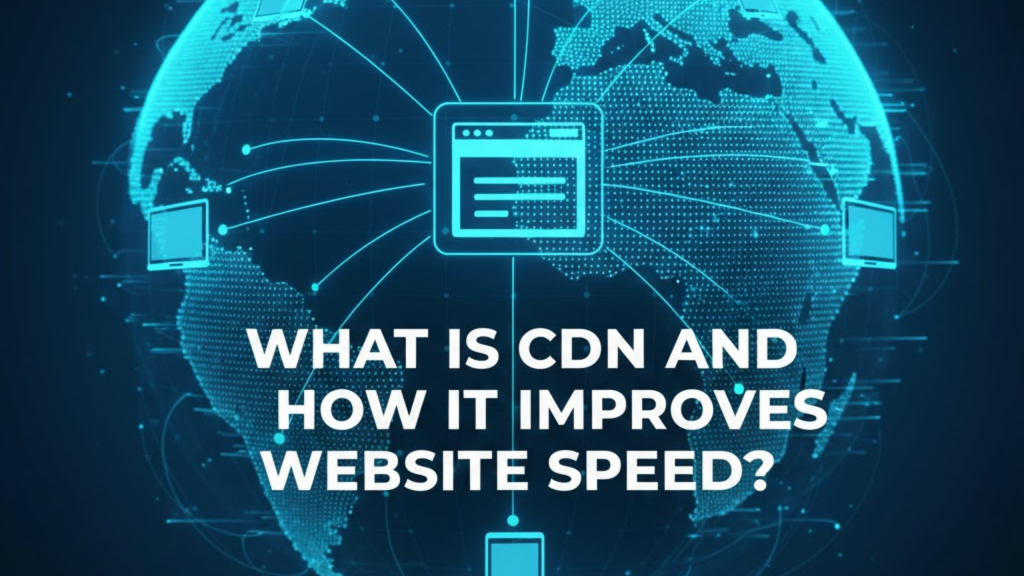
The simplest answer to What Is CDN and How It Improves Website Speed is that it closes the physical gap between your content and your users. Instead of every user connecting to your main server (the Origin), a CDN stores “cached” copies of your images, CSS, and scripts on Points of Presence (PoPs) around the world.
When a user clicks your link, the request is routed to the nearest PoP. This is What Is CDN and How It Improves Website Speed in action: a user in London gets data from a server in London, not from your host in New York.
2. What Is CDN and How It Improves Website Speed? Offloading the Load
If you are asking What Is CDN and How It Improves Website Speed, you must consider your server’s health. During a traffic spike (like a viral post), a single server can crash under the pressure. A CDN acts as a “buffer,” handling up to 90% of the requests itself.
This “offloading” is What Is CDN and How It Improves Website Speed during peak times. It prevents bottlenecks and ensures that your origin server can focus on critical tasks like processing payments or database queries.
3. What Is CDN and How It Improves Website Speed? Advanced 2026 Features
In 2026, the technology behind What Is CDN and How It Improves Website Speed has evolved beyond simple file storage. Modern CDNs use Predictive Loading (AI that guesses what page a user will click next) and Edge Computing (running code closer to the user).
These innovations are What Is CDN and How It Improves Website Speed for dynamic content. Even personalized shopping carts and search results can now be processed at the “Edge,” resulting in perceived load times of zero.
Frequently Asked Questions (FAQ)
1. Does a CDN replace my web hosting?
No. This is a common point of confusion regarding What Is CDN and How It Improves Website Speed. You still need a Best Website Hosting 2026 provider to hold your original files. The CDN simply distributes copies of those files.
2. Is a CDN expensive for small blogs?
Not at all. In 2026, many of the top 5 free AI platforms and hosting providers include a basic CDN for free. For larger sites, “Pay-as-you-go” models (like Bunny.net) make it very affordable.
3. Will a CDN help with Apple Security Warnings?
If your CDN is not configured with a valid SSL/TLS certificate, you might trigger an Apple Security Warning on your iPhone. Most modern CDNs provide automated, free SSL certificates to ensure the process of What Is CDN and How It Improves Website Speed remains secure.
Final Verdict: What Is CDN and How It Improves Website Speed?
If your audience is more than 500 miles away from your server, you need a CDN. By understanding What Is CDN and How It Improves Website Speed, you can:
- Slash Latency by 50% or more.
- Improve SEO by passing Core Web Vitals.
- Protect Your Site from DDoS attacks.
Start using a CDN today to ensure your website is fast, reliable, and ready for a global audience.
More From Weblogtrips
- Why Your Website Is Slow and How to Fix It: CDNs are the #1 fix for global slowness.
- REST API vs GraphQL Explained for Beginners: APIs are where most CORS errors live.
- Best Website Hosting 2026: Find hosts with integrated CDN features.
- HTML vs HTML5: What’s the Real Difference?: The foundation that holds your CSS.
- Frontend vs Backend vs Full Stack 2026 Guide: Why layout skills are vital for frontend developers.
- Apple iPhone Security Warning Guide: Why SSL at the edge is mandatory.
- What Happens When You Type a URL in a Browser: How the browser parses HTML5 code.
External Links
- Cloudflare: What is a CDN?: The industry standard explanation.
- Akamai: Edge Computing Trends: Learn how CDNs are evolving in 2026.
- Fastly: How CDN Caching Works: A technical breakdown of PoPs and edge servers.