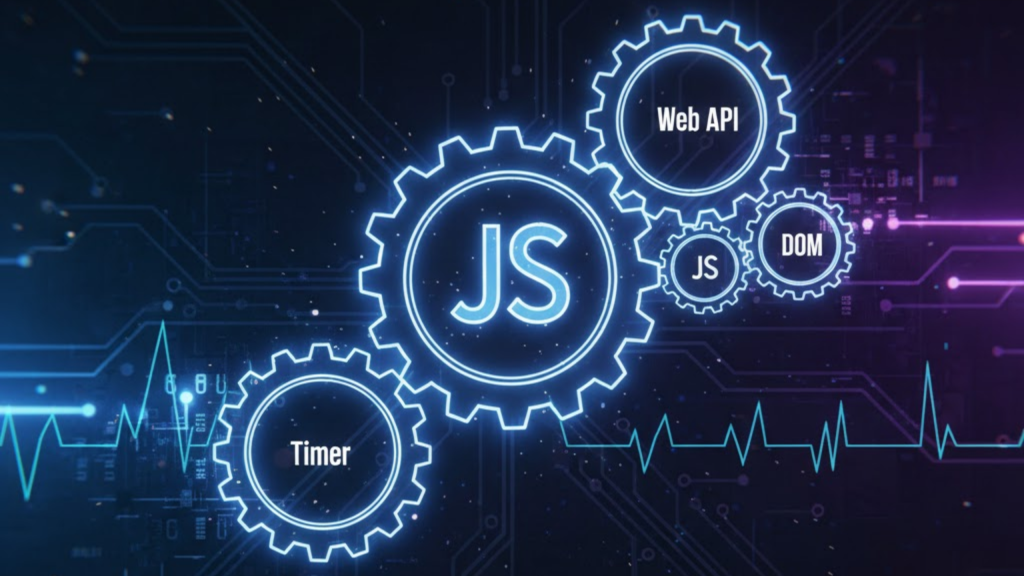
If you’ve ever wondered Why JavaScript Is Single-Threaded (And Why That’s Powerful), you’re not alone. It sounds like a massive limitation—having only one “brain” to process code—but this specific design is exactly why the web is as stable and fast as it is today. In 2026, while other languages struggle with complex multi-threading bugs, JavaScript remains the king of the modern web.
At WeBlogTrips, we believe the best developers are those who understand the “Why” behind the “How.” Let’s explore Why JavaScript Is Single-Threaded (And Why That’s Powerful) by looking at the Event Loop, concurrency, and why “one thing at a time” is actually a superpower.
Visual Breakdown: Why JavaScript Is Single-Threaded (And Why That’s Powerful)
| Feature | Multi-Threaded (Java/C++) | Single-Threaded (JavaScript) |
| Execution | Multiple tasks at once | One task at a time |
| Complexity | High (Race conditions/Deadlocks) | Low (Predictable execution) |
| Concurrency | Parallel threads | Event Loop & Asynchronous callbacks |
| DOM Safety | Risky (Multiple threads hitting UI) | Safe (Only one thread touches the UI) |
| Resource Use | High memory per thread | Lightweight & efficient |
1. Why JavaScript Is Single-Threaded (And Why That’s Powerful): The Safety Factor
The most critical reason Why JavaScript Is Single-Threaded (And Why That’s Powerful) is the Document Object Model (DOM). In the browser, the DOM is not “thread-safe.” If two different threads tried to change the color of the same button at the exact same millisecond, the browser would crash.
By being single-threaded, JavaScript ensures that UI updates happen in a predictable, synchronized order. This is Why JavaScript Is Single-Threaded (And Why That’s Powerful): it eliminates the “Race Conditions” that plague other languages, making your web apps more stable for the user.
2. Why JavaScript Is Single-Threaded (And Why That’s Powerful): The Event Loop Magic
You might ask: “If it only does one thing, why doesn’t my screen freeze during an API call?” The answer to Why JavaScript Is Single-Threaded (And Why That’s Powerful) lies in the Event Loop.
JavaScript delegates “waiting” tasks (like fetching data or timers) to the browser’s internal C++ threads. While those threads wait for the data, the main JavaScript thread stays free to handle user clicks and animations. This “Non-Blocking” nature is Why JavaScript Is Single-Threaded (And Why That’s Powerful): it gives the illusion of multitasking without the technical headache of managing threads.
3. Why JavaScript Is Single-Threaded (And Why That’s Powerful): Scalability in Node.js
On the server side, Why JavaScript Is Single-Threaded (And Why That’s Powerful) becomes even clearer. Traditional servers create a new thread for every single visitor, which eats up massive amounts of RAM.
Node.js uses a single thread to handle thousands of concurrent connections. Instead of waiting for a database to respond, it moves to the next visitor. This high-concurrency, low-resource model is Why JavaScript Is Single-Threaded (And Why That’s Powerful) for modern, high-traffic backends.
Frequently Asked Questions (FAQ)
1. Does JavaScript ever use more than one thread?
Yes! In 2026, we use Web Workers for heavy math or image processing. However, these run in a totally separate environment and cannot touch the DOM directly. This preserves the core benefit of Why JavaScript Is Single-Threaded (And Why That’s Powerful).
2. Is “Single-Threaded” the same as “Slow”?
Absolutely not. Because there is no “Context Switching” (the overhead of moving between threads), JavaScript can actually be faster for I/O-heavy tasks like chat apps or streaming.
3. Why am I getting an “Apple Security Warning” in my JS console?
If your script tries to access sensitive hardware (like the camera) without user permission or over an insecure connection, you might trigger an Apple Security Warning on your iPhone. Always ensure your asynchronous calls are secure.
Final Verdict: Why JavaScript Is Single-Threaded (And Why That’s Powerful)
The beauty of Why JavaScript Is Single-Threaded (And Why That’s Powerful) is simplicity. It allows you to write complex, highly interactive applications without worrying about the low-level synchronization bugs that haunt other environments.
By mastering the concepts of Why JavaScript Is Single-Threaded (And Why That’s Powerful), you can write more efficient, non-blocking code that delivers a world-class user experience.
More From Weblogtrips
- Why Your Website Is Slow and How to Fix It: CDNs are the #1 fix for global slowness.
- REST API vs GraphQL Explained for Beginners: APIs are where most CORS errors live.
- Best Website Hosting 2026: Find hosts with integrated CDN features.
- HTML vs HTML5: What’s the Real Difference?: The foundation that holds your CSS.
- What Happens When You Type a URL in a Browser: Where JavaScript begins its execution.
- Frontend vs Backend vs Full Stack 2026 Guide: Why JS is the only language that works on both ends.
- Apple iPhone Security Warning Guide: Keeping your async scripts safe.
External Links
- MDN: JavaScript Execution Model: The official technical documentation.
- Node.js Deep Dive: The Event Loop: How the server handles concurrency.
- Philip Roberts: What the heck is the event loop anyway?: The most famous visual explanation of this concept.