When you start building applications that talk to a server, you will inevitably face the big debate: REST API vs GraphQL Explained for Beginners. In 2026, the web is more data-heavy than ever. Choosing the wrong way to fetch that data can make your app feel slow and bloated.
At WeBlogTrips, we simplify complex tech so you can build faster. This guide covers REST API vs GraphQL Explained for Beginners by looking at how they handle data, their performance in the real world, and which one you should learn first.
⚡ Comparison: REST API vs GraphQL Explained for Beginners
| Feature | REST API | GraphQL |
| Data Fetching | Multiple endpoints (URLs) | Single endpoint |
| Response Shape | Fixed by the server | Defined by the client |
| Over-fetching | Common (gets too much data) | None (gets exactly what you ask for) |
| Caching | Built-in via HTTP | Complex/Application-level |
| Learning Curve | Low (uses standard HTTP) | High (requires new syntax |
1. REST API vs GraphQL Explained for Beginners: The Endpoint Difference
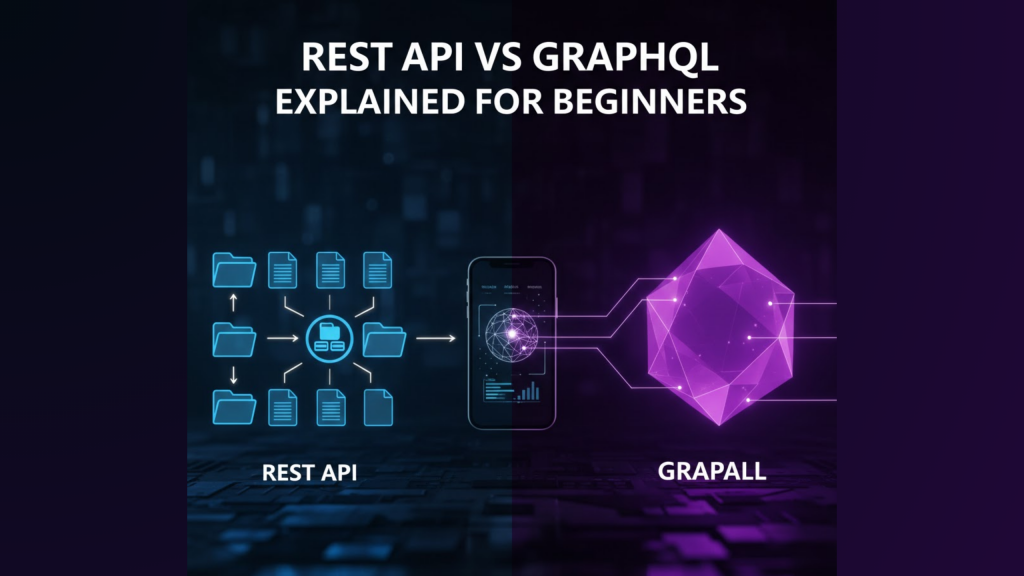
The most basic part of REST API vs GraphQL Explained for Beginners is how you access data. In a REST system, you have different “addresses” for different things. To get a user’s profile and their posts, you might have to call /users/1 and then /users/1/posts.
GraphQL changes this by using a single “smart” endpoint. Instead of multiple URLs, you send a single query to /graphql asking for exactly the user and post fields you want. This structural shift is the core of REST API vs GraphQL Explained for Beginners.
2. REST API or GraphQL? Explained for Beginners: Solving Data Bloat
A huge pain point in REST API vs GraphQL Explained for Beginners is “Over-fetching.” REST often gives you a massive object when you only need one name. This wastes bandwidth, especially on mobile devices.
GraphQL allows the client to “pick and choose” fields. If you only want a username, you only get the username. This precision is why many modern mobile apps prefer GraphQL when weighing REST API vs GraphQL Explained for Beginners.
3. REST API / GraphQL? Explained for Beginners: Versioning and Growth
As your app grows, REST requires you to create new versions (like /v1/ and /v2/) to avoid breaking old apps. In the world of REST API vs GraphQL Explained for Beginners, GraphQL handles this by simply adding new fields to the existing schema. Old apps just ignore the new fields, allowing the API to evolve without “versioning hell”.
Frequently Asked Questions (FAQ)
1. Is GraphQL faster than REST?
Not necessarily. While GraphQL can be faster for complex data by reducing network trips, the server has to do more “work” to parse your custom query. For simple tasks, REST is often snappier.
2. Which one should I learn first as a beginner?
Most experts recommend starting with REST. It uses standard HTTP methods (GET, POST, PUT, DELETE) that are foundational to the web. Once you understand the basics of REST API vs GraphQL Explained for Beginners, you can move to GraphQL for more complex projects.
3. Why does my GraphQL query trigger an Apple Security Warning?
If your GraphQL endpoint is hosted on an insecure http URL or uses self-signed certificates for local development, you might see an Apple Security Warning on your iPhone. Always use HTTPS to keep your data transfers secure.
Final Verdict: REST API vs GraphQL Explained for Beginners
The choice in REST API vs GraphQL Explained for Beginners depends on your project:
- Choose REST for simple, stable, and public-facing APIs.
- Choose GraphQL for complex, data-heavy apps with multiple client types (web + mobile).
By understanding REST API vs GraphQL Explained for Beginners, you can build more efficient systems that serve your users exactly what they need.
More From Weblogtrips
- Why Your Website Is Slow and How to Fix It: See how SSR improves initial load speed.
- HTML vs HTML5: What’s the Real Difference?: The foundation that holds your CSS.
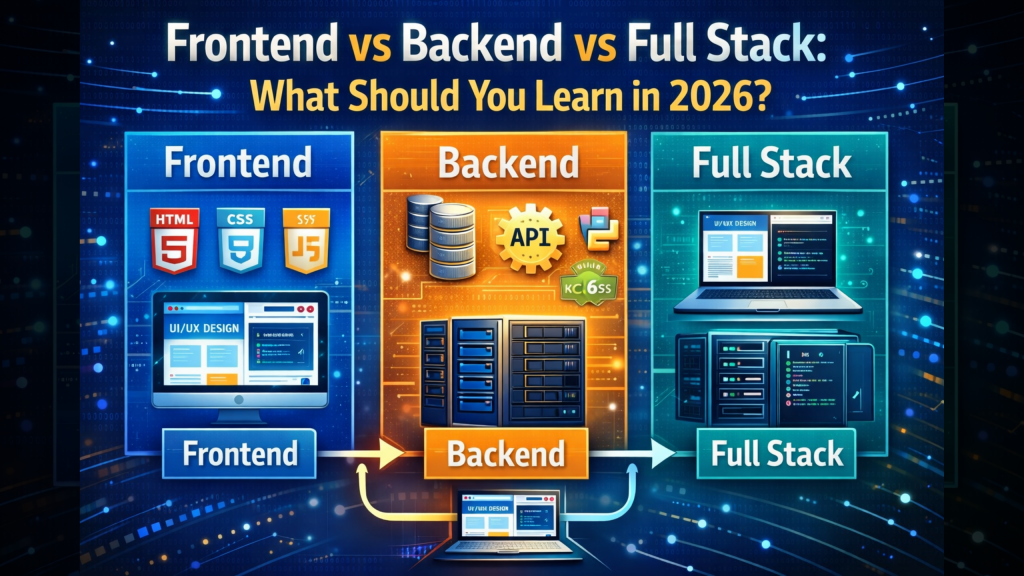
- Frontend vs Backend vs Full Stack 2026 Guide: Why layout skills are vital for frontend developers.
- Apple iPhone Security Warning Guide: Keeping your CSS-heavy site safe.
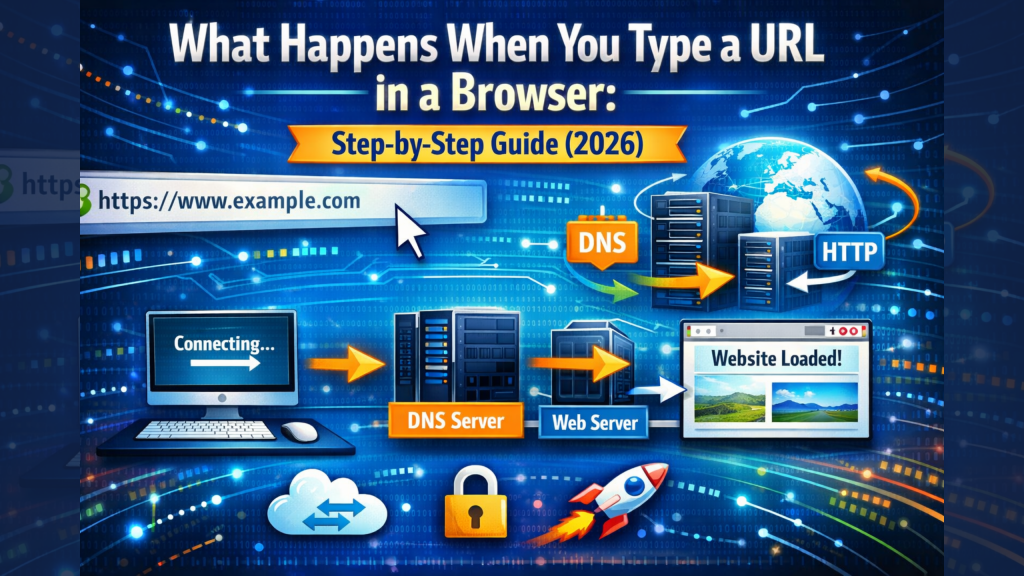
- What Happens When You Type a URL in a Browser: How the browser parses HTML5 code.
External Links
- Official GraphQL Documentation: The primary source for learning GraphQL syntax.
- IBM: GraphQL vs REST: A high-level architectural comparison.
- Postman: API Architecture Guide: Tools and best practices for testing both.