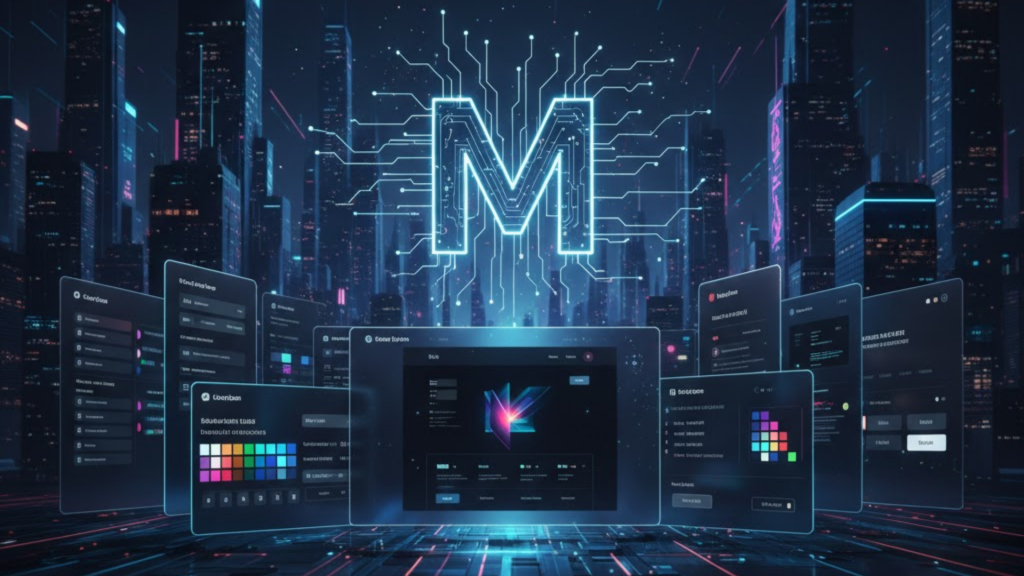
What is a “Dark Mode First” design system?
A Dark Mode First approach treats the dark theme as the primary interface rather than a secondary toggle. In 2026, this means designing with a “Deep-Layered” philosophy, using shadows, luminosity, and relative color syntax to create depth. Instead of just inverting white to black, a modern system uses a range of neutral greys and desaturated accents to maintain legibility and brand identity in low-light environments.
Designing for the dark requires a fundamental shift in how we perceive contrast and visual hierarchy.
3 Rules for a Dark-First Color Palette
In 2026, the “Pure Black” (#000000) trap is avoided. It causes “smearing” on OLED screens and creates harsh contrast that tires the eyes. Use these rules instead:
1. The Elevation Principle (Surface Greys)
In light mode, we use shadows to show an element is “floating.” In dark mode, shadows are often invisible.
- The Strategy: Use Lighter Greys to indicate elevation. The “closer” an element is to the user, the lighter its background should be. This creates a natural sense of depth without relying on drop shadows.
2. Avoid High Saturation
Bright, saturated colors (like “Pure Red”) vibrate against dark backgrounds, making text vibrate and blur (the “Halation” effect).
- The Strategy: Use Desaturated Pastels for your primary and secondary colors. These “softer” tones are easier to read and feel more premium in a dark environment.
3. The 15.8% Rule (Contrast Ratios)
For accessibility, WCAG 2.2 standards in 2026 require a minimum contrast ratio of 4.5:1 for body text. However, in dark mode, you should aim for a “sweet spot” that is high enough for legibility but low enough to prevent “eye bleed”.
Implementing Semantic Tokens in CSS
To build a system that scales, you must move away from “Hardcoded Colors.” Use Semantic Tokens that change based on the user’s preference.
- Functional Naming: Instead of naming a variable
--dark-grey, name it--bg-primary. - CSS Light/Dark syntax: In 2026, we use the native
light-dark()function:CSS:root { color-scheme: light dark; --bg-primary: light-dark(#ffffff, #121212); --text-main: light-dark(#1a1a1a, #e0e0e0); }
This ensures your design system handles the transition automatically at the browser level.
Dark Mode Accessibility Checklist
In 2026, a dark UI must be more than beautiful; it must be functional for everyone.
- Respect System Preferences: Always use the
@media (prefers-color-scheme: dark)query as the default state. - Image Dimming: High-brightness images can “blind” users in dark mode. Use a CSS filter to slightly dim images (
filter: brightness(.8) contrast(1.2)) when the dark theme is active. - Typography Weight: Text often looks “bolder” in white-on-dark. Consider reducing your
font-weightby 50–100 units for dark mode to maintain the same visual weight as light mode.
Frequently Asked Questions (FAQ)
1. Is “Dark Mode First” better for SEO?
Indirectly, yes. It improves User Retention and reduces bounce rates for users browsing at night. Since Google tracks “Time on Page” as a quality signal in 2026, a comfortable dark UI keeps people reading longer.
2. Why does my dark mode look “muddy”?
This usually happens when you use a “pure grey” palette. Try adding a 1-2% tint of your brand’s primary color (e.g., a tiny bit of blue or purple) to your background greys. This adds “atmosphere” and makes the UI feel intentional.
3. Should I ever use pure black?
Only for very small areas or specifically for OLED “Power Saving” modes. For general UI, a very dark charcoal (#121212) is much more comfortable for the human eye.
4. Why do I see an Apple Security Warning on my dark mode toggle?
If your theme toggle attempts to store user data in a non-secure local storage key without proper encryption or Consent Management, you may trigger an Apple Security Warning on your iPhone.
5. What is “OLED Smearing”?
This is a visual artifact where black pixels take a split second to “wake up” when you scroll, creating a purple ghosting effect. Using a dark grey background instead of pure black completely eliminates this issue.
6. Can I build a dark-mode-only site?
Yes. Many high-end 2026 “Dev-Tool” and “Gaming” sites are dark-mode only. However, if your site is for general reading or government services, you should always provide a light mode for accessibility.
7. How does dark mode affect battery life?
On OLED and AMOLED screens, dark mode can reduce power consumption by up to 60%, making it an essential feature for mobile-first 2026 applications.
8. What tools help with dark mode contrast?
In 2026, Figma’s Variables and the Adobe Leonardo color engine are the industry standards for generating accessible, dark-first color scales.
Final Verdict: Design for the Night
In 2026, Dark Mode First is no longer a trend; it is the default expectation. By building a design system that prioritizes depth, desaturation, and elevation, you create a premium experience that respects your user’s eyes and their device’s battery.
Ready to polish your UI? Explore our guide on Glassmorphism 2.0: Modern CSS Techniques or learn how to optimize your site’s performance in Critical CSS: How to Inline Styles for Instant Loading.
Authority Resources
- Material Design: Dark Theme Elevation and Contrast – The definitive guide on surface layers and accessibility.
- UX Movement: Why Pure Black Backgrounds Are Bad for UX – A deep dive into halation and eye strain.
- Smashing Magazine: Designing for Dark Mode – Latest 2026 trends in semantic tokens and color logic.
- Stark: Accessibility in Dark Mode – Ensuring your contrast meets the latest global standards.