
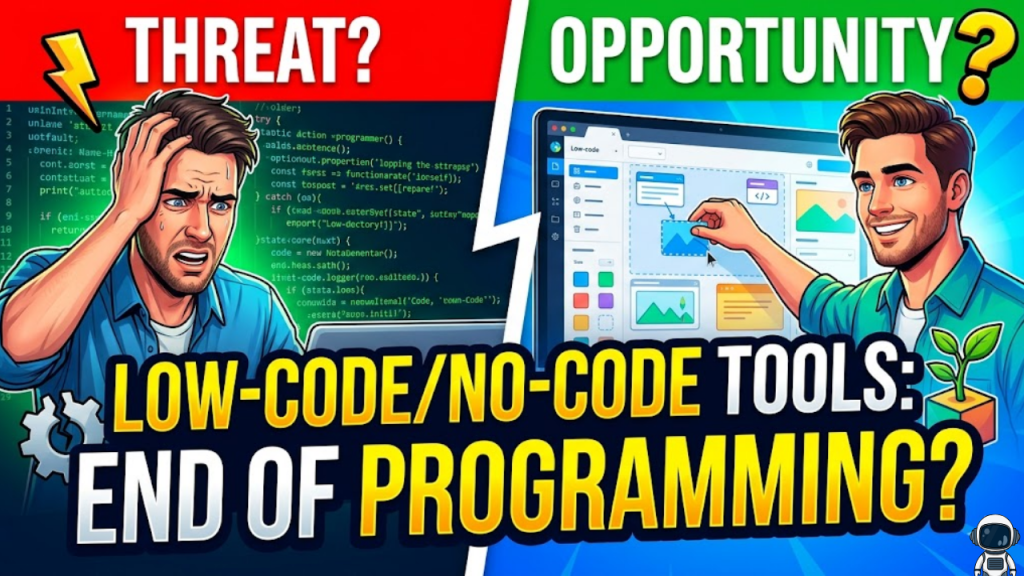
What is the state of Low-Code/No-Code in 2026?
Low-code and no-code (LCNC) platforms have moved from being “simple toys” to core enterprise infrastructure. In 2026, over 75% of new enterprise applications use these platforms, up from less than 25% just a few years ago. This shift occurred because the demand for software now grows 5x faster than traditional IT departments can handle.
For the modern developer, these tools represent a fundamental change in the “job description.” You are no longer just a writer of code; instead, you are becoming an Orchestrator of Systems.
Opportunity: Why LCNC is a Developer’s Secret Weapon
In 2026, professional developers who embrace LCNC report a 90% reduction in their backlogs. These tools act as a “cognitive exoskeleton,” allowing you to offload the boring parts of the job.
- Eliminating “Mundane” CRUD: Use low-code to build internal dashboards, admin panels, and simple approval workflows in hours. Consequently, you free up your schedule to focus on complex architecture and proprietary algorithms.
- Rapid Prototyping: In 2026, you can “vibe code” a functional prototype in minutes to show a client. Once they approve the “vibe,” you can then extend it with custom Pro-Code for performance and security.
- Governed Citizen Development: You can empower non-technical teams (HR, Marketing) to build their own tools. Your role then shifts to a high-value Consultant who ensures these tools follow security, data privacy, and architectural standards.
The “Threat”: What You Must Watch Out For
While the opportunities are vast, LCNC introduces new risks that only a professional developer can solve.
- Shadow IT & Technical Debt: If non-technical staff build apps without oversight, they create “Shadow IT.” These apps often have security gaps, duplicated logic, and messy data silos that eventually break.
- Vendor Lock-In: Many 2026 platforms make it easy to start but hard to leave. As an architect, you must evaluate a platform’s Data Portability and whether it allows for Git-based version control before committing.
- The “Complexity Ceiling”: Low-code is great until you hit a wall. When a business needs a highly specific integration or ultra-high performance, the “no-code” version fails. This is where your Pro-Code skills become a “superpower” that saves the project.
Market Comparison: Pro-Code vs. Low-Code (2026)
| Feature | Pro-Code (Traditional) | Low-Code / No-Code (2026) |
| Development Speed | Months | Days or Weeks |
| Customization | Unlimited / Deep | Restricted to components |
| Primary User | Professional Engineers | Business Technologists |
| Ideal For | Core Products / High Scale | Internal Tools / Automations |
| Cost to Build | High (Specialized Talent) | Low (Reduced manual labor) |
Frequently Asked Questions (FAQ)
1. Will low-code tools replace web developers by 2030?
No. Instead, they will replace the repetitive parts of the job. In 2026, the demand for developers who can design resilient systems and manage AI-integrated workflows is actually increasing.
2. What is a “Citizen Developer”?
This is a 2026 term for a non-IT employee (like a Financial Analyst) who uses no-code tools to build their own business applications. By 2026, they outnumber professional developers four to one.
3. Should I learn a low-code platform?
Yes. Mastering a platform like Mendix, OutSystems, or Microsoft Power Platform adds a massive “Speed” asset to your resume. It shows you know how to deliver value quickly.
4. Why do I see an Apple Security Warning on my low-code app?
If your platform uses unverified third-party connectors or insecure data tunnels, you may trigger an Apple Security Warning on your iPhone. Always ensure your platform has built-in governance.
5. Can low-code apps handle enterprise security?
Yes, provided they are “Governed.” Modern 2026 platforms include AI-assisted security scanning and compliance frameworks (GDPR, AI Act) by default.
6. What is “Vibe Coding”?
It is a 2026 term for using AI and low-code to generate apps based on “intent” and “descriptions.” While fast, it requires a professional developer to review the output for Architectural Intelligence.
7. Does low-code help with legacy modernization?
Absolutely. In 2026, low-code is the preferred path for modernizing old .NET or Java monoliths. You can “wrap” the old logic in a modern, low-code interface to extend its life.
8. What is the biggest mistake when adopting low-code?
“Governing later.” If you don’t set up permissions, audit logs, and data-loss prevention policies from day one, your low-code ecosystem will eventually turn into a maze.
Final Verdict: Embrace the Multiplier
In 2026, Low-Code/No-Code tools are the ultimate opportunity. By letting these platforms handle the “how” (the syntax), you can focus on the “what” (the logic and business value). The developers who thrive in 2026 are those who use low-code to work faster while using their professional expertise to keep those systems secure and scalable.
Ready to accelerate your workflow? Explore our guide on Building an AI Design Assistant with Gemini or learn about the Top Dev Skills Needed to Shine in 2026.
Authority Resources
- SAP: Low-Code/No-Code – The Future of Development – A deep dive into the collaboration between citizen and professional developers.
- ToolJet: Low-Code Development Platforms Statistics and Trends 2026 – The latest market valuations and adoption data.
- HackerNoon: Low-Code and No-Code in 2026 – Picking a Platform – Practical advice on avoiding vendor lock-in and security traps.
- WaveMaker: AI Coding Tools Face 2026 Reset Towards Architecture – Why “Architectural Intelligence” is replacing “Vibe Coding”.