What is a WordPress PWA in 2026?
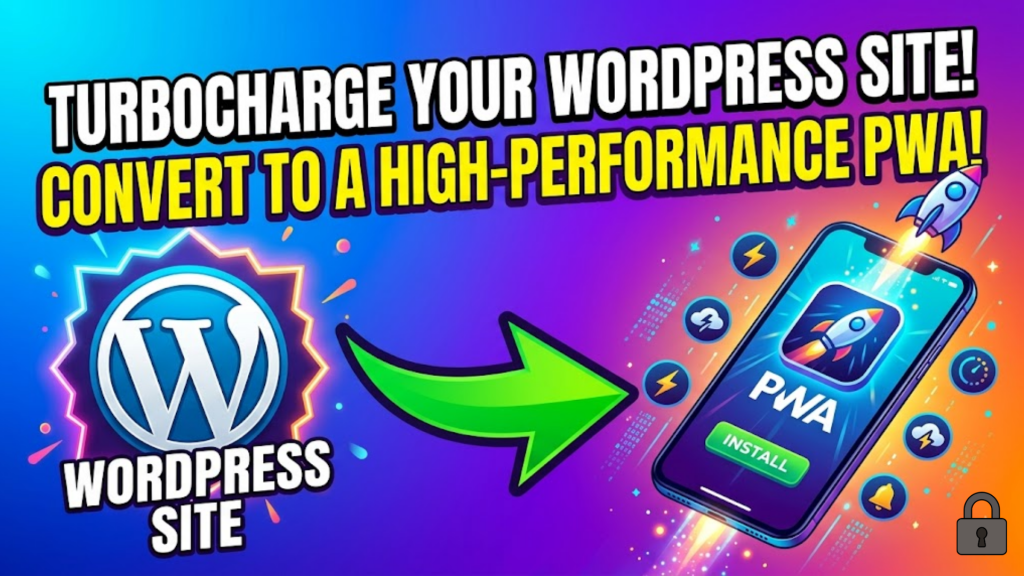
A WordPress PWA is a website that uses modern web capabilities to deliver an app-like experience directly through the browser. In 2026, this technology has become the bridge between the web and native apps. By adding a Service Worker and a Web App Manifest, your site becomes installable on home screens, loads instantly via background caching, and stays functional even without an internet connection.
This conversion doesn’t just improve speed; it transforms your site into a reliable tool that users can access anytime, anywhere.
3 Pillars of a High-Performance WordPress PWA
In 2026, a successful PWA conversion relies on three technical components working in harmony.
1. The Web App Manifest
The Manifest is a simple JSON file that tells the browser how your “app” should look when installed.
- The Strategy: Define your app’s name, theme colors, and icons (specifically 192×192 and 512×512 sizes). Use the
standalonedisplay mode to remove the browser’s URL bar, giving your site a true full-screen app feel.
2. Service Worker Caching
The Service Worker is a background script that intercepts network requests.
- The Strategy: Use a “Stale-While-Revalidate” strategy for your blog posts. This serves the cached version immediately while fetching the latest update in the background. For static assets (CSS, JS, Logos), use a “Cache-First” approach to ensure they load in under 200ms.
3. HTTPS and Security
Service Workers require a secure context.
- The Strategy: Ensure your site has a valid SSL certificate. In 2026, browsers will not register a Service Worker on a non-HTTPS site, making security a non-negotiable prerequisite for PWA status.
How to Convert WordPress: Plugins vs. Manual
You can choose the path that best fits your technical comfort level.
- The Plugin Path (Recommended for Beginners): Use established tools like SuperPWA or PWA for WP & AMP. These plugins automate the generation of the manifest and service worker files, allowing you to configure your app-like settings directly from the WordPress dashboard.
- The Manual Path (For Maximum Control): Create a
manifest.jsonand aservice-worker.jsfile in your theme’s root directory. Register the service worker in yourfunctions.phpfile. This method allows you to fine-tune your caching logic and minimize “Cache Bloat”.
Frequently Asked Questions (FAQ)
1. Does a PWA help my WordPress SEO?
Yes, significantly. Because PWAs are faster and more mobile-friendly, they align perfectly with Google’s Core Web Vitals ranking factors. Furthermore, search engines can index PWA content just like a regular website, unlike native apps.
2. Can I send Push Notifications with a WordPress PWA?
Absolutely. In 2026, PWAs support native push notifications on both Android and iOS (via Safari). You can use plugins like OneSignal to re-engage users with alerts about new posts or sales.
3. Does a PWA work offline?
Yes. By caching your site’s “App Shell” and recently visited pages, users can still browse your content or view their saved carts even when they lose their internet connection.
4. Why do I see an Apple Security Warning on my PWA?
If your PWA attempts to access the microphone or camera without a clear “Privacy Purpose” string in your manifest, or if it uses unverified third-party scripts, you may trigger an Apple Security Warning on your iPhone.
5. What is the “Add to Home Screen” (A2HS) prompt?
This is a browser-generated banner that invites users to “install” your site. In 2026, AI-driven prompts can trigger this at the exact moment a user shows high engagement, increasing install rates by up to 40%.
6. Do I need to submit my PWA to the App Store?
No. One of the biggest advantages of a PWA is that it bypasses the app stores entirely. Users install it directly from your URL, saving you from store fees and approval delays.
7. How do I test my WordPress PWA?
Use the Lighthouse tool in Chrome DevTools. It provides a dedicated “PWA” audit that checks your manifest, service worker, and security to ensure your app meets the 2026 “Installability” standards.
8. What is the “App Shell” architecture?
The App Shell is the minimal HTML, CSS, and JS required to power your user interface. By caching this shell, your app’s layout loads instantly, and only the “dynamic content” (like the blog post text) needs to be fetched.
Final Verdict: Future-Proof Your WordPress Site
In 2026, a static website is no longer enough. By converting your WordPress site into a PWA, you provide the speed of the web with the engagement of an app. This transition is the ultimate way to lower your bounce rates, increase user loyalty, and dominate the mobile search results.
Ready to upgrade? Explore our guide on How to Become a Web Developer in 2026 to learn the skills behind these tools, or discover how to stabilize your UI in Reducing Layout Shift (CLS) in Dynamic Ads.
Authority Resources
- Elsner: Transform Your WordPress Site into a PWA – A strategic look at the performance and cost benefits for businesses.
- Pantheon: Fast-Loading WordPress PWAs for High-Traffic – Advanced service worker strategies and HTTPS requirements.
- Cloudways: How to Build a WordPress PWA Guide – Step-by-step comparison between plugin and manual setups.
- MDN Web Docs: Web Application Manifest – The official technical specification for PWA installability.