What is a Modular API Architecture?
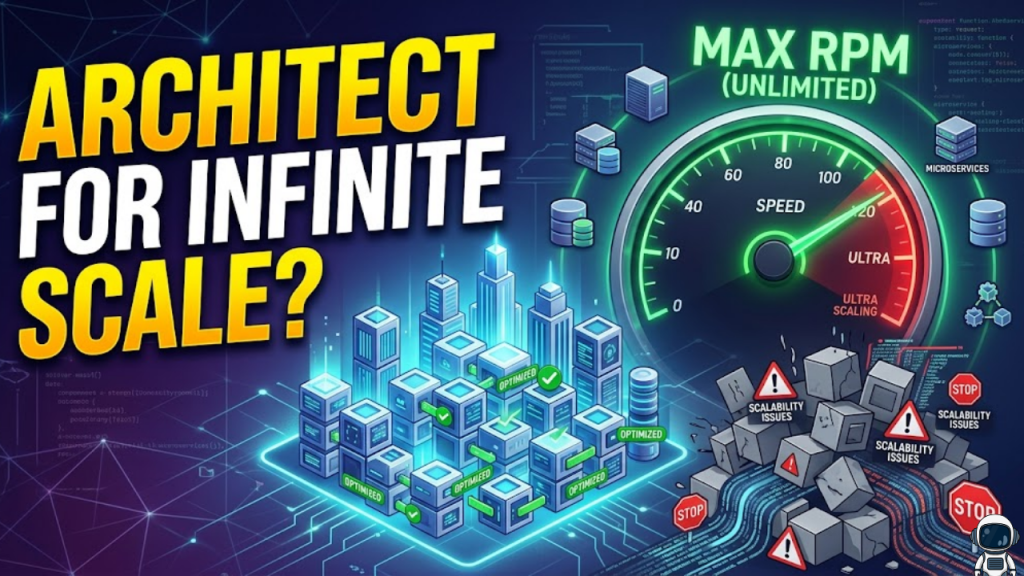
A modular API architecture is a design pattern where an application’s interface is broken down into small, self-contained, and interchangeable functional units. In 2026, this is often implemented as a Composable Modular Monolith or a set of Microservices. Unlike a rigid monolith, a modular system allows you to scale a high-traffic “Checkout” service independently from a low-traffic “User Profile” service. This ensures that a spike in one area doesn’t crash your entire platform.
In the 2026 “Agent Economy,” modularity is the only way to ensure your APIs remain discoverable and secure for both human developers and autonomous AI agents.
The 2026 Scalability Framework: Monolith vs. Modules
In 2026, the industry has rejected “premature microservices.” Instead, elite teams start with a modular monolith and only extract services once they hit massive scale.
| Feature | Monolithic API | Modular API Architecture |
| Deployment | All-or-nothing | Independent or Unified |
| Scaling | Scale the whole app | Scale specific modules |
| Tech Stack | Locked to one | Flexibility per module |
| Fault Isolation | One bug crashes all | Failures are contained |
| Dev Speed | Slower (Coordination) | 30-40% Faster cycles |
3 Pillars of Modular API Design
To build an API that truly scales in 2026, you must enforce strict boundaries between your functional areas.
1. Domain-Driven Bounded Contexts
Stop building APIs based on “tables” and start building them based on “capabilities.”
- The Strategy: Use Domain-Driven Design (DDD) to identify logical boundaries. For example, in a FinTech app, the “Wallet” and “Stock Trading” modules should never share a database or internal state. They must communicate only through well-defined API contracts.
2. The API-First Contract (OpenAPI/MCP)
In 2026, the contract is the source of truth.
- The Implementation: Define your endpoints and schemas in OpenAPI 3.1 or the Model Context Protocol (MCP) before writing any code. This allows frontend and backend teams (and AI agents) to work in parallel without waiting for implementation.
3. Distributed Observability
You cannot scale what you cannot see.
- The Implementation: Use a Service Mesh (like Istio or Linkerd) or an AI-Native Gateway. These tools provide “East-West” visibility, allowing you to trace a single request as it hops between different modules to find exactly where a bottleneck is occurring.
Frequently Asked Questions (FAQ)
1. Is modular architecture better for AI agents?
Yes. In 2026, over 30% of API traffic comes from AI tools. Modular APIs that use standardized metadata and clear “Capabilities” are much easier for AI models to discover and invoke correctly.
2. When should I switch from a monolith to microservices?
The 2026 “North Star” is to wait until you hit 1 million requests per day or have more than 50 developers. Before that point, a Modular Monolith provides the same benefits with 5x less operational complexity.
3. Does modularity increase latency?
If you use microservices, yes, due to network hops. However, a Modular Monolith keeps communication “in-process,” meaning you get the benefits of modularity with the zero-latency speed of a monolith.
4. Why do I see an Apple Security Warning on my API calls?
If your API gateway uses insecure local tunnels or self-signed certificates for internal module testing, you may trigger an Apple Security Warning on your iPhone.
5. What is an “AI Gateway”?
It is a 2026 evolution of the API gateway that handles contextual requests from AI agents, enforces token usage limits, and monitors for “Agentic Anomalies” in your API traffic.
6. Can I use different databases for different modules?
Yes. This is called Polyglot Persistence. You might use a Graph database for your “Social” module and a standard SQL database for your “Billing” module, connecting them via standardized APIs.
7. What is “Service Versioning” in 2026?
Instead of versioning the whole API, you version individual modules. This allows you to upgrade your “Payment” logic to v2 without forcing the “Catalog” module to change.
8. Does modularity help with security?
Absolutely. By isolating modules, you reduce the Blast Radius. If an attacker compromises your “Comments” module, they are still “walled off” from your “User Credentials” module.
Final Verdict: Modular by Choice, Scalable by Design
In 2026, Modular API Architecture is the bridge between speed and stability. By breaking your system into functional units today, you ensure that you can scale to meet the demands of tomorrow, whether that demand comes from millions of users or thousands of AI agents.
Ready to build? Explore our guide on Zero-Trust Architecture for Web Developers to secure your modules, or learn about Building Backendless Apps with Server Functions.
Authority Resources
- NeosAlpha: API Trends in 2026 – From Endpoints to AI Control Layers – The rise of MCP and AI-driven API traffic.
- Medium: The Silent Rise of Modular App Architectures in 2026 – Strategic blueprints for enterprise scalability.
- Xano: Modern API Design Best Practices for 2026 – Core principles for consistency, security, and predictability.
- DistantJob: Monolith vs Microservices in 2026 Decision Framework – Helping engineering teams balance complexity and scale.