What are smart city sensors?
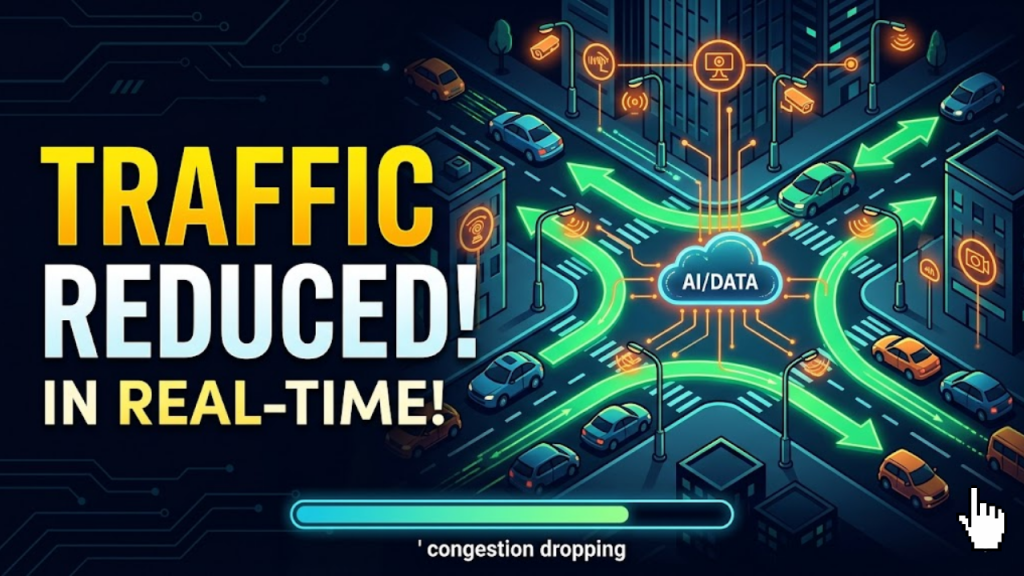
Smart city sensors are a network of physical devices, such as cameras, inductive loops, and radar units, that act as the sensory organs of an urban environment. In 2026, these devices collect real-time data on vehicle flow, pedestrian density, and air quality. By feeding this stream of information into AI-driven traffic management platforms, cities can dynamically adjust traffic signals and optimize lane usage to prevent gridlock before it begins.
Instead of relying on rigid, timer-based traffic lights from the 20th century, we are now using data-driven ecosystems that breathe with the rhythm of the city.
The 3 Pillars of Real-Time Traffic Optimization
In 2026, traffic reduction is no longer about adding more lanes. It is about maximizing the efficiency of the lanes we already have through three core technological mechanisms.
1. Adaptive Signal Control (The “Brains”)
Traditional lights operate on fixed timers, which waste time during off-peak hours.
- The Strategy: Adaptive systems use AI to analyze current queue lengths via sensors. If an intersection is empty, the system automatically extends the green light for the busier road.
- The Result: This dynamic allocation reduces idling time and prevents the “stop-and-go” waves that cause major bottlenecks during rush hour.
2. Vehicle-to-Infrastructure (V2X) Communication
Cars are no longer just passive objects on the road. In 2026, they are active participants in the traffic grid.
- The Strategy: Through V2X technology, vehicles communicate their speed, direction, and braking intentions to the roadside infrastructure.
- The Result: The system can “smooth out” traffic flow by notifying cars to adjust their speed before they hit a sudden brake event. This coordination prevents the shockwaves that lead to traffic jams.
3. Predictive Edge AI
Processing data in the cloud is often too slow for traffic management.
- The Strategy: Cities are deploying Edge AI processors directly inside traffic cameras and sensor boxes. These devices process video feeds locally to detect accidents or stalled vehicles in milliseconds.
- The Result: Traffic management centers can reroute traffic instantly, diverting cars to alternative paths before a minor incident turns into a city-wide delay.
The 2026 Smart Infrastructure Checklist
If you are advising a municipality or tech startup, these are the current standards for successful sensor deployment:
- Data Sovereignty: Use GDPR-compliant systems that anonymize video data locally, ensuring no faces or license plates are stored in a centralized database.
- Resilient Connectivity: Deploy sensors that support 5G or 6G and fiber optics for ultra-low latency, ensuring data transmission remains stable during peak traffic spikes.
- Digital Twin Integration: Feed your sensor data into a “Digital Twin” of the city. This allows planners to run simulations, testing how a new bike lane or signal change will affect flow before they commit to physical construction.
Frequently Asked Questions (FAQ)
1. How much can sensors actually improve traffic flow?
In 2026, successful deployments have shown travel time reductions of 20% to 40% during peak hours, depending on the density and quality of the sensor network.
2. Is this technology expensive to implement?
Initial deployment requires investment. However, the savings in fuel costs, reduced emissions, and improved economic productivity often pay for the system within 3 to 5 years.
3. Does this replace traffic police?
Not entirely. It automates flow, allowing traffic police to focus on manual intervention, emergency response, and complex situations where human judgment is needed.
4. Why do I see an Apple Security Warning on my traffic app?
If your local traffic tracking app attempts to pull geolocation data without proper background location permissions or uses unverified map-caching scripts, you may trigger an Apple Security Warning on your iPhone.
5. Can hackers manipulate traffic lights?
Security is a primary concern. In 2026, modern smart traffic systems use mTLS (Mutual TLS) and hardware-level encryption to ensure that only authorized control centers can send signals to the infrastructure.
6. Are sensors affected by bad weather?
Modern LIDAR and radar sensors are largely weather-proof, meaning they can “see” through heavy rain, fog, and snow much better than older camera-based systems.
7. What is the role of 6G in traffic management?
6G is the next frontier. It promises even lower latency and higher device density, allowing for “micro-sensing” where every single car acts as a probe for traffic data.
8. Is this technology only for big cities?
No. Smaller municipalities are adopting “Lean IoT” solutions, using low-power sensors and LoRaWAN networks to manage traffic on a much smaller budget.
Final Verdict: The Data-Driven Street
In 2026, the solution to urban congestion is not more asphalt. It is smarter connectivity. By utilizing Smart City Sensors to create an adaptive, responsive, and predictive traffic grid, we can make our cities cleaner, faster, and more livable for every citizen.
Ready to modernize your infrastructure? Explore our guide on Zero-Trust Architecture for Web Developers to see how to secure these sensor networks, or learn about the Impact of WebAssembly (Wasm) on Browser Performance to build faster dashboards
Authority Resources
- MEXC News: How Is Tech Solving Urban Congestion? – Overview of AI and IoT impact on 2026 transportation markets.
- LoRa Alliance: IoT Trends in Municipalities – Strategies for cost-effective traffic management for local authorities.
- IoT Business News: Smart Cities and Infrastructure – Latest insights into connected urban services.
- Trends Research: AI-Integrated Traffic Systems – Impact on sustainability and carbon neutrality.