100 days of java

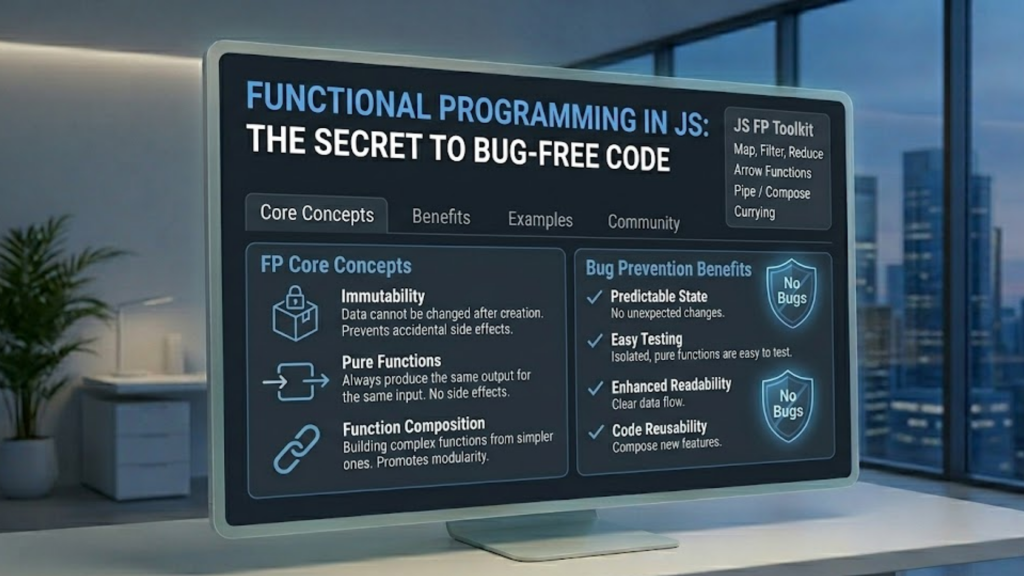
Functional Programming in JS: Why It’s the Secret to Bug-Free Code

Functional Programming in JS: Why It’s the Secret to Bug-Free Code

What is Functional Programming in JavaScript? Functional Programming (FP) is a declarative coding paradigm where you build software by composing Pure Functions, avoiding shared state, and treating data as Immutable. In 2026, FP has become the “Gold Standard” for large scale applications because it eliminates the hidden side effects that cause 80% of software bugs. […]

Functional Programming in JS: Why It’s the Secret to Bug-Free Code Read More »
TypeScript 5.x Features Every Senior Dev Should Use

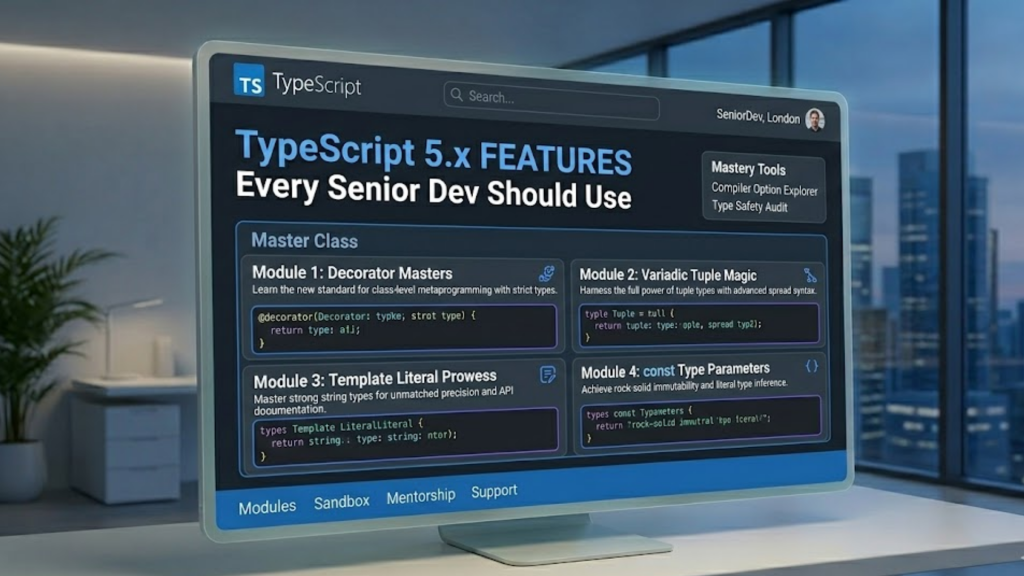
TypeScript 5.x Features Every Senior Dev Should Use

Why focus on TypeScript 5.x? The 5.x era of TypeScript has shifted away from simply “adding types” to “Type Orchestration.” In 2026, senior developers use these features to create “Zero-Error” developer experiences for their teams. Features like Stable Decorators, Satisfies, and Explicit Resource Management allow you to write code that is not only type-safe but

TypeScript 5.x Features Every Senior Dev Should Use Read More »

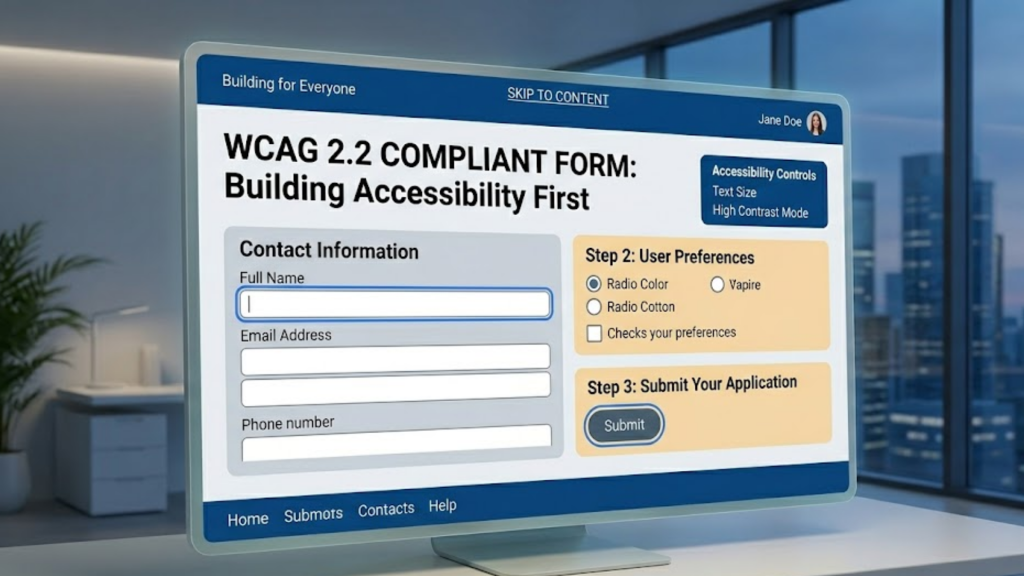
Accessibility First: Building WCAG 2.2 Compliant Forms

Accessibility First: Building WCAG 2.2 Compliant Forms

What is the WCAG 2.2 standard for forms? WCAG 2.2 is the 2026 benchmark for web accessibility. While previous versions focused on screen readers, WCAG 2.2 adds critical protections for users with cognitive disabilities, low vision, and motor impairments. For forms, this means moving beyond simple labels and focusing on Redundant Entry prevention, Accessible Authentication,

Accessibility First: Building WCAG 2.2 Compliant Forms Read More »

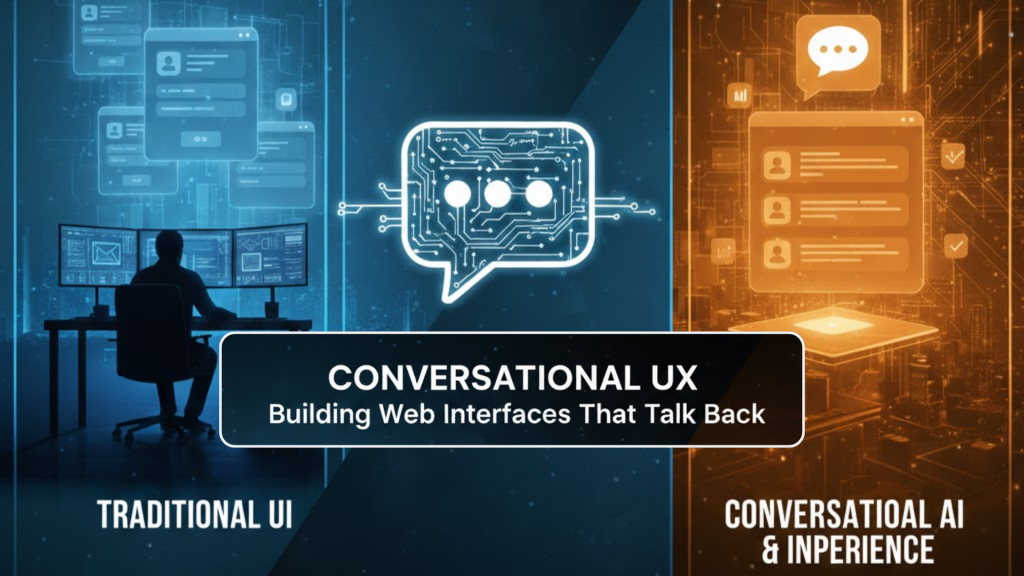
Conversational UX Building Web Interfaces That Talk Back

Conversational UX: Building Web Interfaces That Talk Back

What is Conversational UX? Conversational UX is a design philosophy where the primary interaction between a user and a website happens through a natural language dialogue rather than traditional menus and buttons. In 2026, this has evolved from simple chatbots into Agentic Interfaces. These systems don’t just “chat”; they perform actions, like booking flights, filtering

Conversational UX: Building Web Interfaces That Talk Back Read More »

Motion UI Using Micro-Animations to Increase User Retention

Motion UI: Using Micro-Animations to Increase User Retention

What are micro-animations in 2026? Micro-animations (or micro-interactions) are small, functional motion cues that respond to user actions. In 2026, they have evolved from “cute additions” to “essential feedback loops.” They serve a single, clear purpose: acknowledging a user’s intent and confirming that the system has processed it. When a button subtly pulses upon being

Motion UI: Using Micro-Animations to Increase User Retention Read More »

Minimalist vs. Maximalist Web Design Which Converts Better

Minimalist vs. Maximalist Web Design: Which Converts Better?

Which design style converts better in 2026? The answer depends entirely on your objective: Minimalism converts better for quick, transactional actions (like SaaS signups or service bookings), increasing conversion rates by up to 11% due to reduced friction and faster load times. Conversely, Maximalism drives higher long-term engagement, with immersive e-commerce stores seeing a 22%

Minimalist vs. Maximalist Web Design: Which Converts Better? Read More »

Glassmorphism 2.0: Modern CSS Techniques for Depth (2026)

Glassmorphism 2.0: Modern CSS Techniques for Depth (2026)

What is Glassmorphism 2.0? Glassmorphism 2.0 is the 2026 evolution of the “frosted glass” aesthetic. While version 1.0 relied on simple blurs, Glassmorphism 2.0 focuses on surface transduction—the realistic way light interacts with digital materials. It uses advanced CSS techniques like relative color syntax, mask-image gradients, and multi-layered backdrop filters to create interfaces that feel

Glassmorphism 2.0: Modern CSS Techniques for Depth (2026) Read More »