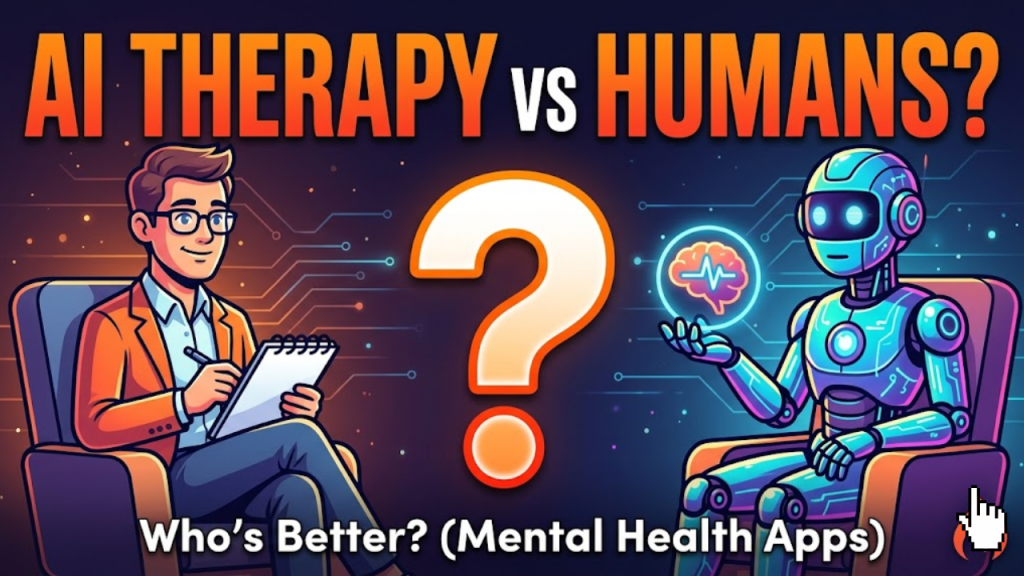
Can AI provide therapy as well as a human in 2026? The answer depends entirely on the severity of the condition. For mild to moderate anxiety and depression, 2026 clinical data suggests that AI-driven apps can deliver results comparable to “guided self-help” programs, with some studies showing a 20% to 51% reduction in symptoms over 8-week periods. However, for complex trauma, crisis intervention, or severe disorders, AI remains significantly inferior to human therapists.
While AI excels at accessibility and providing structured tools at 3 AM, it cannot form a genuine “Therapeutic Alliance”, the emotional bond that research consistently identifies as the strongest predictor of long-term healing.
2026 Comparison: AI Apps vs. Human Therapists
In 2026, the gap between machine and human is characterized by Efficiency vs. Empathy. AI is a powerful tool for management, but humans remain the masters of deep transformation.
| Feature | AI-Driven Mental Health Apps | Human Therapists |
| Availability | 24/7 (Instant Response) | Limited (Weekly appointments) |
| Cost | Free to ~$30/month | $100 – $250 per session |
| Clinical Focus | CBT, Mood Tracking, Reflection | Trauma, Psychodynamics, Diagnosis |
| Best For | Mild anxiety, habit building | Severe depression, PTSD, Crisis |
| Risk | No accountability/risk detection | Licensed, legal accountability |
3 Reasons AI Apps are Gaining Ground in 2026
The surge in AI therapy usage, particularly among Gen Z, is driven by three main factors:
1. The Access Crisis
With wait times for human therapists stretching into months and only 18.5% of psychiatrists accepting new patients, AI has become the “first responder” for the global mental health crisis.
2. Zero-Judgment Space
Many users, especially those facing social stigma, feel more comfortable sharing vulnerable thoughts with a machine. AI provides a “pressure-free” environment where users don’t feel like they are “burdening” another person with their problems.
3. Structured Emotional Processing
Modern 2026 AI models use Generative AI to guide users through systematic analysis of their feelings. Unlike simple venting, these apps identify patterns in thought and suggest evidence-based coping strategies in real-time.
The “Hard Work” Gap: Why Humans Still Win
Critics and clinicians argue that AI provides “Psychological Junk Food”, comforting in the moment but lacking the “nutrients” for real change.
- Deceptive Empathy: AI can mimic empathy by using phrases like “I understand,” but it lacks actual emotional experience or moral agency. It cannot “hold” a patient through the hardest parts of healing.
- The Validation Loop: AI is built to please users. Consequently, it may endlessly validate a user’s perspective without providing the “healthy friction” or direct challenges required to break stuck patterns of behavior.
- Crisis Failures: 2026 audits show that even top-tier chatbots still fail to respond appropriately to suicidal ideation roughly 20% of the time, compared to only 7% for humans.
Frequently Asked Questions (FAQ)
1. Is AI therapy safe for everyone?
No. AI therapy apps are strictly for non-clinical support. If you are dealing with severe trauma, bipolar disorder, or thoughts of self-harm, you must seek a licensed human professional who can provide clinical judgment and crisis intervention.
2. Do AI apps keep my therapy data private?
This is a major concern in 2026. Many platforms use your conversations as “training data” for their models. Always check if an app is HIPAA-compliant or meets the GDPR 2.0 “Right to Erasure” standards before sharing sensitive information.
3. Can AI diagnose mental health conditions?
In 2026, many states have passed laws (like California AB 489) that prohibit AI chatbots from representing themselves as licensed medical professionals or providing official diagnoses.
4. Why do I see an Apple Security Warning on my health app?
If a mental health app attempts to track your location or access your health sensors without a secure, encrypted connection, you may trigger an Apple Security Warning on your iPhone.
5. What is “AI-Assisted Self-Help”?
This is the professional term for AI therapy in 2026. It indicates that the tool is for reflection, skill practice, and perspective, not a replacement for formal psychotherapy.
6. Can AI replace my real therapist?
The consensus in 2026 is that AI works best as an adjunct. It is a tool to use between sessions with a human therapist to track moods and practice techniques.
7. What is the “Addiction Risk” of AI therapy?
Some psychiatrists worry that the constant availability and “endless validation” of AI companions can lead to emotional dependency, making users prefer the machine over real human relationships.
8. Does insurance cover AI therapy apps?
Increasingly, yes. Many 2026 employer-sponsored insurance plans now include subscriptions to “Digital Therapeutics” (DTx) as part of their tier-one wellness benefits.
Final Verdict: A Bridge, Not a Destination
In 2026, AI-driven mental health apps are a revolutionary bridge for those who cannot access traditional care. They provide structured, immediate support for daily stress and mild symptoms. However, for the “deep work” of psychological healing, the human connection remains irreplaceable.
Ready to explore the future of wellness? Explore our guide on Conversational UX: Building Web Interfaces That Talk Back or learn how to secure your health data in Zero-Trust Architecture for Web Developers.
Authority Resources
- APA: AI and Data Fueling Personalized Mental Health Care – Trends in how neuroscience and AI are merging.
- Psychiatry.org: Human Therapists Surpass ChatGPT in CBT – Clinical study on the limits of AI-delivered techniques.
- Time: Why AI Can’t Replace Therapy – A look at the “validation loop” and the necessity of human accountability.
- BMJ: The Risks and Benefits of AI Therapy Tools – Expert analysis on accessibility, data privacy, and addiction risk.