What is CRISPR 2.0?
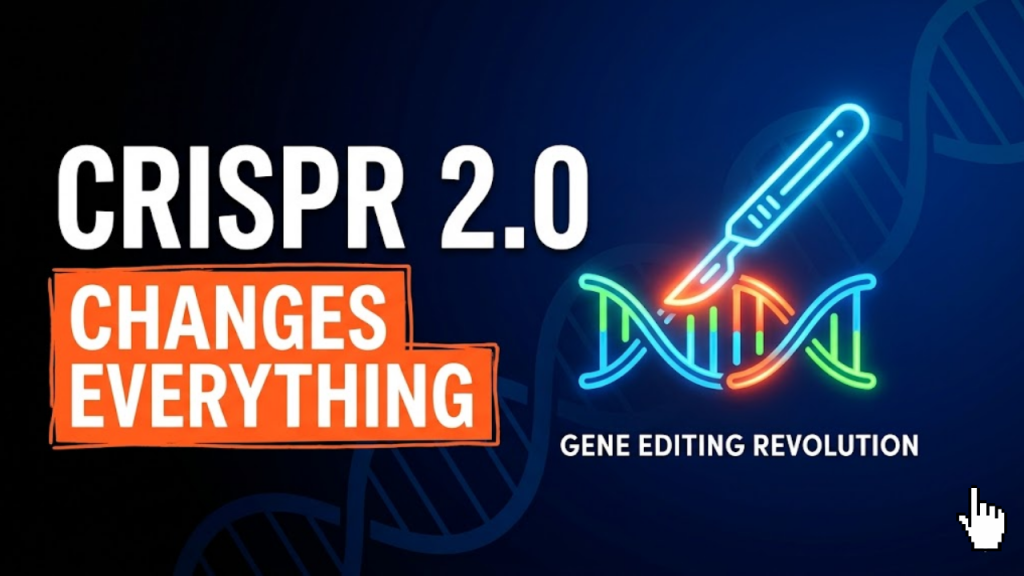
CRISPR 2.0 refers to the second generation of gene-editing technologies, specifically Base Editing and Prime Editing, that have moved beyond the “molecular scissors” of original CRISPR-Cas9. In 2026, the focus has shifted from simply cutting DNA to “search-and-replace” editing. Unlike the first generation, which often caused unintended mutations by breaking both strands of DNA, CRISPR 2.0 systems can rewrite single genetic letters or insert entire gene sequences without making a single double-strand break.
By 2026, this high-precision approach has transformed genetic medicine from a “risky bet” into a bespoke clinical reality for thousands of rare diseases.
The Evolution: CRISPR 1.0 vs. CRISPR 2.0
In 2026, the medical community distinguishes these technologies based on their “surgical” accuracy and safety profiles.
| Feature | CRISPR 1.0 (Cas9) | CRISPR 2.0 (Base/Prime) |
| Action | Cuts DNA (Double-strand break) | Rewrites DNA (No break) |
| Risk | High off-target mutations | Ultra-low off-target risk |
| Primary Use | Gene “Knockouts” (Disabling) | Gene “Correction” (Repairing) |
| Clinical Focus | Blood disorders (Sickle Cell) | Rare hereditary & complex diseases |
| 2026 Status | Established (FDA Approved) | Rapid Clinical Expansion |
3 Breakthroughs Defining Genetic Treatment in 2026
The shift to CRISPR 2.0 has opened doors that were previously considered “un-editable” by scientists.
1. Bespoke “N-of-1” Approvals
In early 2026, the FDA unveiled a landmark roadmap for Bespoke Gene Editing. This allows doctors to use CRISPR 2.0 to treat individual patients with ultra-rare “N-of-1” mutations. This was notably demonstrated by “Baby KJ,” the first infant to receive a personalized CRISPR therapy for a rare metabolic disorder, setting a precedent for custom medicine.
2. Epigenetic Tuning (Scribe/CasX)
In 2026, we don’t always need to change the DNA sequence itself. Epigenetic Silencing platforms (like those from Scribe Therapeutics) use CRISPR proteins to simply “tune” a gene’s volume. By adding epigenetic marks, doctors can turn off disease-causing proteins (like PCSK9 for heart disease) without permanently altering the genome.
3. Prime Editing for Complex Insertions
While base editing handles single-letter swaps, Prime Editing has matured in 2026 as the ultimate “Word Processor.” It can now insert small, healthy sequences of DNA into specific sites, offering potential cures for complex conditions like cystic fibrosis and certain cancers that require more than a simple letter change.
Frequently Asked Questions (FAQ)
1. Is CRISPR 2.0 safer than the original CRISPR?
Yes. Because CRISPR 2.0 (Base/Prime) does not create double-strand breaks, it avoids the “chromosomal chaos” that sometimes occurs when a cell tries to repair a broken DNA strand. This significantly reduces the risk of unintended cancerous mutations.
2. What diseases are being treated in 2026?
Clinical trials are currently targeting Sickle Cell Disease, Leukemia, Hereditary Blindness, and Urea Cycle Disorders. Emerging 2026 trials are even looking at chronic conditions like High Cholesterol and HIV.
3. Can I get a “custom” CRISPR treatment today?
Under the new 2026 FDA guidance, “bespoke” treatments are possible for life-threatening rare diseases. However, these are currently reserved for cases where no other treatment exists and the genetic root cause is well-identified.
4. Why do I see an Apple Security Warning on my health portal?
If your clinical portal or lab result app attempts to share sensitive genomic data over a non-secure connection, you may trigger an Apple Security Warning on your iPhone.
5. What is “In Vivo” vs “Ex Vivo” editing?
Ex Vivo (like the first Sickle Cell treatments) involves editing cells outside the body and putting them back. In Vivo (the 2026 frontier) involves injecting the CRISPR 2.0 tool directly into the patient’s bloodstream to find and fix cells in the liver, heart, or brain.
6. Will CRISPR 2.0 lead to “Designer Babies”?
Ethical regulations in 2026 remain strictly focused on Somatic Editing (fixing a sick patient). Editing “Germline” cells (embryos) remains controversial and is largely prohibited in professional medicine to prevent permanent changes to future generations.
Final Verdict: From “Cutting” to “Curing”
In 2026, CRISPR 2.0 has fulfilled the promise of precision medicine. By shifting from a destructive “cut” to a constructive “edit,” we are now curing diseases that were death sentences only a decade ago. We have moved beyond the era of experimental platform bravado into a new age of accountable, personalized medicine.
Ready to explore more? Check out our guide on How to Become a Web Developer in 2026 to see how software powers these biotech labs, or learn about the Zero-Trust Architecture for Health Data.
Authority Resources
- Innovative Genomics Institute: CRISPR Clinical Trials 2026 – The latest status on ongoing human trials and new technologies.
- Broad Institute: Questions and Answers about CRISPR – Foundational knowledge from the pioneers of gene editing.
- Fierce Biotech: FDA Roadmap for Bespoke Gene Editing – News on the 2026 regulatory shift for personalized medicine.
- CRISPR Medicine News: CMN Weekly Update 2026 – Industrial and commercial updates from the gene editing sector.