What are battery-free smart implants?
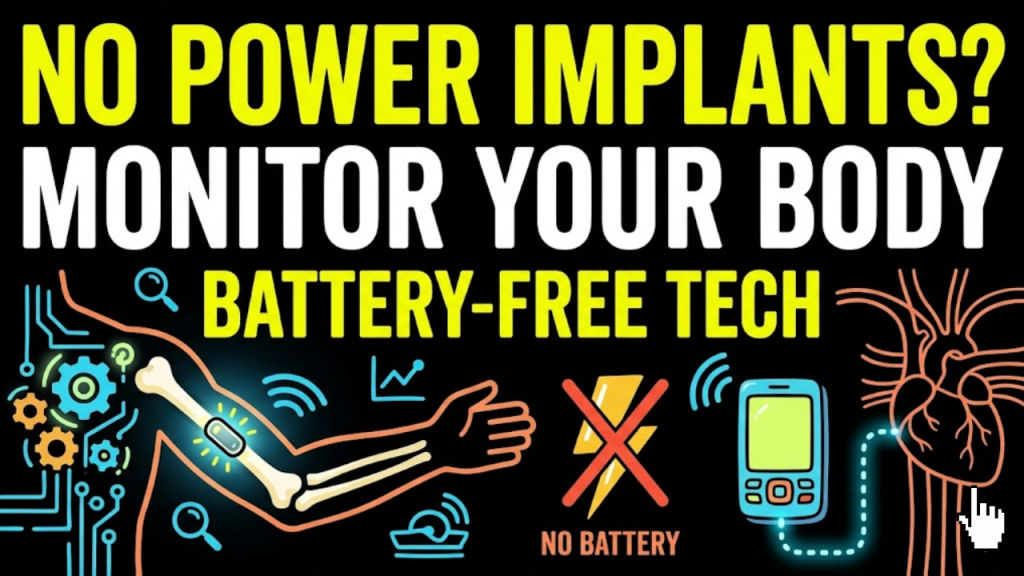
In 2026, smart implants monitor chronic conditions by using Energy Harvesting and Wireless Power Transfer (WPT) to eliminate the need for internal batteries. Instead of relying on a finite power source that requires replacement every few years, these devices “scavenge” energy directly from the user’s body movements, heat, or internal chemical reactions. Furthermore, external devices can “beam” power into the implant using ultrasound or radio frequency (RF) waves, allowing for real-time data streaming without an external battery pack.
This technology is a game-changer for conditions like epilepsy, heart failure, and diabetes, where continuous monitoring is essential but frequent surgeries are dangerous.
The 4 Methods of Self-Powering in 2026
The “Battery-Less” market is dominated by four key harvesting technologies that turn the human body into a living battery.
1. Piezoelectric: Power from Motion
Every time your heart beats or you take a step, you generate mechanical energy. Piezoelectric implants contain materials that convert this physical stress directly into electrical pulses.
- Use Case: Pacemakers that never need a battery swap because they harvest energy from the very heart they regulate.
2. Thermoelectric: Power from Body Heat
These implants take advantage of the temperature difference between your core body heat and the cooler skin surface. This “thermal gradient” is enough to power ultra-low-power sensors.
- Use Case: Chronic inflammation monitors that track local temperature spikes to detect infections early.
3. Magnetoelastic: Power from Blood Flow
Newly developed in April 2026 by teams like those at UCLA, magnetoelastic stents use the physical pulsing of blood flow to generate magnetic changes. An external adhesive patch on the skin then picks up these signals, converting them into data.
- Use Case: Smart stents that monitor blood flow in real-time to detect if an artery is re-narrowing after surgery.
4. Ultrasonic Power Transfer (UPT)
While not “scavenging” from the body, UPT uses safe, high-frequency sound waves to transfer power deep into the body. Unlike radio waves, ultrasound can penetrate deep tissue and bone with high efficiency.
- Use Case: Deep-brain stimulators for Parkinson’s that “wake up” and record data only when an external handheld device is held nearby.
Energy Harvesting Performance: 2026 Comparison
| Technology | Power Source | Best For | 2026 Market Share (Est.) |
| Passive Implants | External Reader (RF/NFC) | Orthopedics/Short-range | 40% |
| Inductive Coupling | Near-field Magnetic | Cardiovascular | 30% |
| Energy Harvesting | Motion/Heat/Chemistry | Chronic Neurology | 20% |
| Biofuel Cells | Blood Glucose | Diabetes Management | 10% |
Frequently Asked Questions (FAQ)
1. Are these battery-free implants safe?
Yes. In 2026, materials like polyvinylidene fluoride (PVDF) and bioresorbable polymers ensure that the harvesting process doesn’t cause inflammation or heat damage to surrounding tissue.
2. How do they send data back to the doctor?
Most use Backscatter Communication. Instead of generating their own powerful radio signal, they “reflect” and modulate the waves sent by an external reader, similar to an advanced RFID tag.
3. What is a “Biofuel Cell” implant?
A biofuel cell harvests energy from the chemical reactions happening in your blood, specifically from glucose and oxygen. It literally “eats” a tiny amount of your blood sugar to power a diabetes monitor.
4. Why do I see an Apple Security Warning on my health app?
If your health monitoring app attempts to connect to an unverified medical implant via Bluetooth or NFC without proper hospital-grade encryption, you may trigger an Apple Security Warning on your iPhone.
5. Can I get an MRI with a smart implant?
In 2026, most smart implants are designed with non-ferrous materials like titanium or specialized polymers to be MRI-compatible. However, you must always check the specific device’s “MRI-Conditional” rating.
6. Do these implants “wear out”?
While they don’t have batteries to die, the harvesting materials can degrade over decades. Current 2026 research focuses on ensuring these materials remain stable for 25 to 30 years.
7. What is “Micro-segmentation” in medical security?
To prevent hacking, 2026 implants use micro-segmentation. This ensures that even if an attacker hacks the data stream, they cannot “hop” to the control center that regulates drug delivery or heart pacing.
8. How small are these devices?
Thanks to miniaturization, some 2026 sensors are now the size of a grain of rice, making them easy to inject rather than requiring major surgery.
Final Verdict: The End of Battery Replacements
In 2026, the smart implant has moved from a “gadget” to a permanent part of the human biological system. By removing the battery, we have removed the single biggest risk factor in implantable medicine. Whether through a beating heart or a simple heat gradient, the body is finally powering its own cure.
Ready to explore more medical tech? Explore our guide on Zero-Trust Architecture for Web Developers to see how these implants stay secure, or learn about the Accessibility First: Building WCAG 2.2 Compliant Forms for healthcare data portals.
Authority Resources
- CSG Talent: The Smart Implant Revolution – Strategic look at orthopedic and neurology trends for the “Big Five” med-tech firms.
- PMC: The Emerging Role of Smart Implants in Healthcare – Deep academic dive into biocompatible sensors and biofeedback loops.
- Coherent Market Insights: Battery Free Implants Market Size 2026-2033 – Detailed economic and technological forecast for the sector.
- UCLA Newsroom: Researchers Develop Smart Stent to Track Blood Flow – Breakthrough report on magnetoelastic energy harvesting.