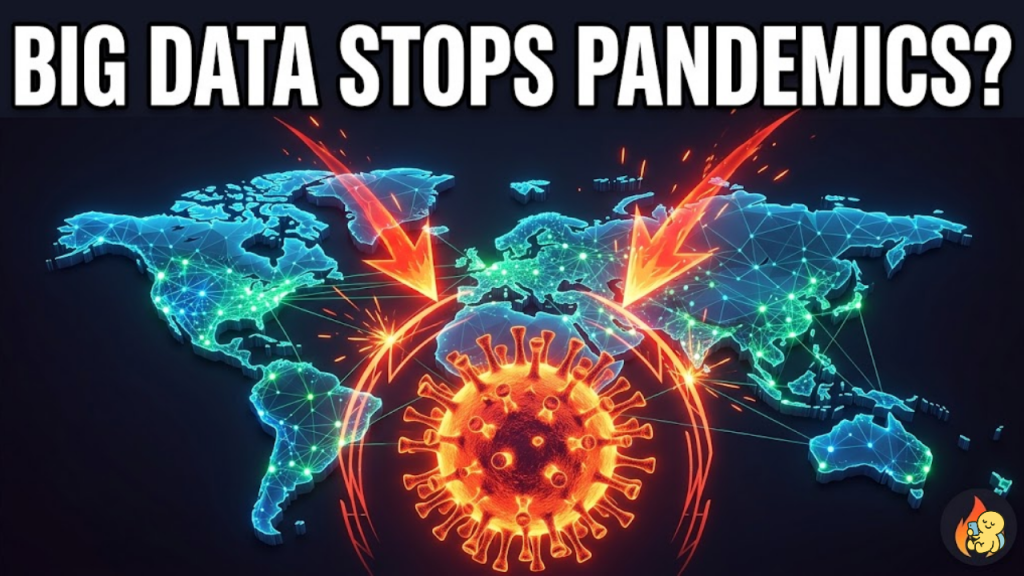
What is the role of Big Data in global health security? In 2026, Big Data functions as the world’s “digital immune system.” By synthesizing massive, real-time datasets, ranging from genomic sequencing to population mobility patterns, Big Data enables health authorities to detect a pathogen before it becomes a widespread crisis. Furthermore, by coupling this data with Agentic AI, we can now compress vaccine development timelines from years into months. This technology acts as a proactive shield that anticipates threats instead of merely reacting to them.
In short, Big Data transforms the “unknown” into “actionable intelligence,” effectively turning a global pandemic into a contained event.
The 3-Tier Defense: How Data Stops Outbreaks
In 2026, the global health infrastructure uses a tiered approach to process information at scale. Consequently, we are no longer limited by the speed of human reporting.
1. Genomic Surveillance (The Early Warning)
Genomic data is the ultimate fingerprint of a virus.
- The Strategy: Global platforms like the Global Pathogen Analysis Platform (GPAP) track the evolution of pathogens across human, animal, and environmental systems. By identifying mutations in real-time, scientists can predict if a virus is becoming more transmissible or resistant to current treatments.
2. Mobility and Social Analytics (The Transmission Map)
Tracking physical movement was once manual work. Now, it is automated.
- The Strategy: Aggregated, privacy-protected mobility data from mobile networks and transportation systems allow AI models to simulate how a virus spreads. These “Susceptible-Exposed-Infectious-Removed” (SEIR) models predict hotspots weeks in advance, allowing for targeted resource allocation.
3. Agentic AI Integration (The Response Orchestrator)
The newest evolution in 2026 is the use of Agentic AI.
- The Strategy: These autonomous systems observe, plan, and act. They integrate data across the vaccine lifecycle, from antigen design to clinical development—minimizing the need for manual oversight. This ensures that when a threat is identified, the response pipeline starts automatically.
Data Sources for Pandemic Prevention
| Data Type | Source | Impact on Pandemic Response |
| Genomic | Laboratory Sequencing | Predicts vaccine efficacy and variants |
| Mobility | Mobile/Transport GPS | Maps transmission pathways |
| Environmental | Satellite/Wildlife Tracking | Identifies spillover risks from animals |
| Social | Search Queries/Chat | Early detection of symptom clusters |
| Healthcare | Electronic Health Records | Real-time monitoring of hospital capacity |
Frequently Asked Questions (FAQ)
1. How does Big Data protect user privacy?
Modern systems utilize Federated Learning and Differential Privacy. This allows researchers to train AI models on patient data without ever actually “seeing” or moving the raw, personal information. The data stays local, while the insights become global.
2. Can Big Data really “stop” a pandemic?
It cannot stop the emergence of a virus, but it can stop an outbreak from becoming a pandemic. By providing early warning signals, it allows for proactive measures like localized containment or rapid vaccine deployment before international spread.
3. Why do I see an Apple Security Warning on some health apps?
If a health app attempts to access sensitive data without your explicit consent or uses unencrypted tracking, you may trigger an Apple Security Warning on your iPhone. Always verify that your health data tools follow strict privacy protocols.
4. What is the role of AI Agents here?
AI agents are “co-pilots” for epidemiologists. They scan millions of research papers, patient records, and genomic sequences to synthesize findings that would take a human team years to process.
5. What are the biggest challenges?
Data fragmentation is the main hurdle. Many countries have different standards for medical data. Therefore, 2026 efforts are focused on Interoperability Standards to ensure data can flow securely between nations.
6. Does this technology help with non-viral threats?
Yes. Big Data platforms are increasingly used to track environmental health, climate risk, and the emergence of antibiotic-resistant bacteria.
7. Who owns the pandemic data?
Usually, the country of origin retains ownership. Platforms like GPAP provide the tools to analyze the data while ensuring that the full control and governance remain with the data providers.
8. How can a beginner get involved in this field?
Focus on Data Science, Epidemiology, or Bioinformatics. Learning how to process “Big Data” using Python, R, and cloud-based AI tools is the best foundation for a career in global health security.
Final Verdict: Data is Our Best Defense
In 2026, Big Data is the foundation of global resilience. By turning raw information into rapid, coordinated action, we can stay ahead of biological threats. This shift from reactive to proactive health management is the most significant advancement in medical science this decade.
Ready to explore the tech stack behind this? Explore our guide on Zero-Trust Architecture for Web Developers to see how we keep this data secure, or learn about the latest AI-driven innovations in How to Use AI Agents to Scaffold Web Apps from Figma.
Authority Resources
- World Economic Forum: AI in Global Preparedness – Official report on the Pandemic Preparedness Engine and GPAP.
- World Health Organization: Digital Health Strategy – Global standards for health data interoperability and digital transformation.
- PMC: Big Data and AI in COVID-19 Management – A classic systematic review of big data application in epidemiology.
- BCG: How AI Agents Will Transform Health Care – Insights on how autonomous agents manage clinical research and patient care.