What is Sleep Architecture?
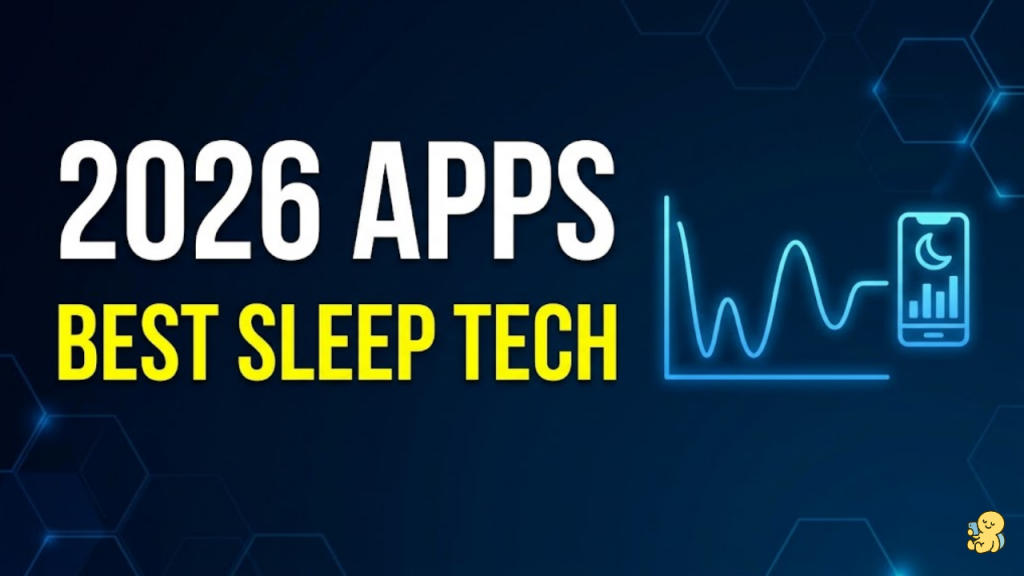
Sleep architecture refers to the structure of your sleep cycles. It includes the patterns and transitions between light sleep, deep sleep (slow-wave sleep), and REM sleep throughout the night. In 2026, the most effective trackers do not just tell you “how long” you slept. Instead, they visualize your specific architecture. This data helps you understand if you are getting enough restorative deep sleep or if your REM cycles are being interrupted, which directly impacts your mental clarity and recovery.
For high-performance individuals, understanding this cycle is the difference between waking up “groggy” and waking up “ready.”
Top 3 Sleep Architecture Trackers (2026 Comparison)
In 2026, the industry has shifted from simple activity trackers to sophisticated “Health Concierges.” These three options provide the most reliable architectural data.
| Feature | Oura Ring 4 | Whoop 5.0 | Sleep Cycle App |
| Data Source | Fingertip PPG (Highest Accuracy) | Wrist PPG (Best for Strain) | Smartphone Mic/Motion |
| Deep Sleep Detail | Exceptional | Moderate | Basic |
| Form Factor | Smart Ring (Frictionless) | Wrist Band (Athletic) | App (No Wearable) |
| Best For | Healthspan & Recovery | Athletic Strain & HRV | Casual Sleepers |
| Subscription | Monthly Required | Monthly Membership | Free/Premium |
How to Interpret Your Sleep Architecture Data
Most apps provide a “Sleep Score,” but you should look deeper to optimize your recovery. Here is what to monitor in 2026:
- Deep Sleep (Slow-Wave Sleep): This stage is vital for physical repair. If you see a downward trend here, your body is likely failing to recover from daily stress.
- REM (Rapid Eye Movement): This stage is essential for cognitive function and emotional processing. If your REM is low, you might notice “brain fog” or irritability during the day.
- Transitions: The frequency of your transitions between stages is just as important as the duration. Frequent “micro-awakenings” (longer than 5 minutes) often signal that your bedroom environment (temperature or light) needs adjustment.
3 Strategies to Improve Your Sleep Architecture
Data is useless without action. Use these 2026 protocols to physically change your sleep patterns:
- Thermal Regulation: Research confirms that heat exposure reduces deep sleep. Use temperature-controlled devices (like the Eight Sleep Pod) to drop your bed temperature by 2 degrees during the first half of the night.
- The “Wind Down” Window: Use AI-coaching features (available in Oura and Rise Science) to set a strict “digital sunset.” This reduces blue light and cortisol before bed, which helps your brain enter the first deep sleep stage faster.
- Heart Rate Variability (HRV) Analysis: Monitor your HRV alongside your sleep architecture. A high HRV during deep sleep suggests your autonomic nervous system is effectively switching into “rest and digest” mode.
Frequently Asked Questions (FAQ)
1. Are consumer sleep trackers as accurate as a lab?
No. Consumer devices use surrogates like heart rate and movement, while a clinical sleep study (polysomnography) uses EEG to track actual brain waves. However, for 95% of users, the trend data from Oura or Whoop is more than enough to improve habits.
2. Why do I see an Apple Security Warning on my sleep app?
If your tracking app attempts to share your health data with unverified third parties or requests permissions outside of the standard HealthKit scope, you may trigger an Apple Security Warning on your iPhone.
3. Does tracking sleep cause “Orthosomnia”?
Orthosomnia is an unhealthy obsession with sleep data. If checking your app causes you anxiety, turn off your notifications. A “perfect” score matters less than how you feel when you wake up.
4. Which app is best for snoring and apnea?
Sleep Cycle and Sleep Monitor are currently the leaders here. They use proprietary sound analysis to detect irregularities in your breathing patterns and provide data you can share with your doctor.
5. Can I use these apps if I share a bed?
Yes. Most modern apps use “AI sound filtering” or sensor fusion to distinguish between your movement/breathing and your partner’s. However, dedicated wearables (like a ring or watch) are always more accurate in a shared bed.
6. Do I need a subscription for these apps?
Most high-end trackers require a subscription because the “AI Coach” or “Generative Advice” models cost money to run in the cloud. However, basic tracking is often free.
7. What is the “Sleep Debt” metric?
Popularized by Rise Science, “Sleep Debt” tracks the difference between the sleep you need and the sleep you actually get over 14 days. It is often more useful than a single-night score.
8. Does temperature really affect my architecture?
Yes. Independent research confirms that dropping your body temperature by just 1 degree significantly increases the time spent in deep sleep (slow-wave sleep).
Final Verdict: Data is the First Step
In 2026, monitoring your Sleep Architecture is the ultimate form of self-care. By identifying which stages you are missing, you can adjust your lifestyle to reclaim your energy. Start with a tracker, monitor your trends, and listen to your body first.
Ready to optimize your biology? Explore our guide on Dark Mode First: Design Systems for the Modern User to set up your nighttime screen environment, or learn how to protect your data in Zero-Trust Architecture for Web Developers.
Authority Resources
- Mattress Clarity: 6 Best Sleep Apps of 2026 – Comprehensive reviews of the latest tracking software and soundscapes.
- The Longevity Store: Best Sleep Trackers Compared – Science-backed comparisons of accuracy and sensors.
- TechRadar: Top Sleep Trackers for 2026 – A guide to the best hardware, from rings to mattress sensors.
- Forbes: Best Sleep Apps for Wellness – Expert recommendations for individualized sleep planning and meditation.