What is the reality of Bio-Acoustics in 2026?
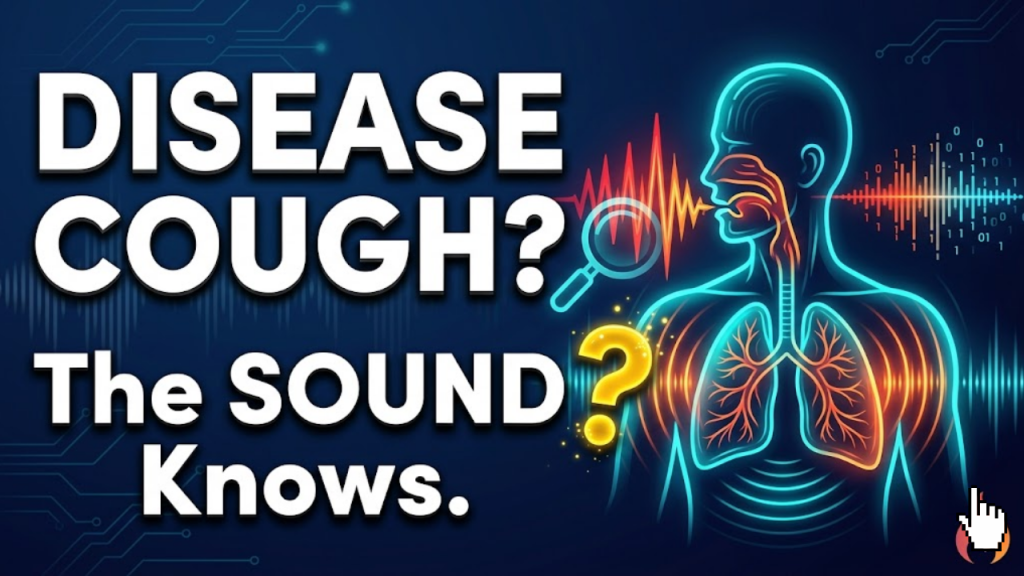
The short answer is yes. In 2026, Bio-Acoustics, the use of AI to analyze sound data for health signals, has moved from experimental theory into practical, clinical-grade screening. Your smartphone microphone now acts as a sophisticated diagnostic sensor. By capturing the unique frequency, energy, and rhythm of a cough, AI models can detect subtle signatures linked to respiratory conditions like COPD, asthma, and even tuberculosis, often days before a patient feels severe symptoms.
This technology is not about “replacing” doctors; rather, it is about closing the diagnostic gap in areas where professional equipment like spirometers remains unavailable.
How Acoustic AI Works in 2026
Modern Bio-Acoustic systems, such as the validated “Shwaasa” app or the “Hyfe” platform, rely on two primary methods to extract health data from sound.
1. Single-Sound Analysis
This method analyzes an individual cough event. An AI algorithm, trained on millions of annotated cough clips, looks for specific patterns in the sound wave. It determines if the cough suggests an obstructive airway (common in asthma) or a deeper, viral-based condition.
2. Longitudinal (Continuous) Monitoring
In many cases, the frequency of the cough over 24 hours is more informative than the sound of a single cough. By running as a background service, these systems identify circadian patterns and “cough bursts.” This longitudinal data helps doctors track treatment efficacy or predict an exacerbation of a chronic disease before it requires an emergency visit.
Privacy and Safety: The “Apple Security” Context
When you use health-tech apps that constantly monitor your audio, privacy is paramount. In 2026, high-quality apps process all audio locally on the device using WebAssembly (Wasm) or mobile-native neural engines.
If an application attempts to send raw audio data to a remote server without explicit, granular consent or encrypted tunnels, you may trigger an Apple Security Warning on your iPhone. Always ensure your health apps process data on-device to keep your biometric voice data safe from external prying eyes.
Performance and Scalability
To power these diagnostics, developers are using optimized AI runtimes. If you are building a health-tech tool, you must prioritize low-latency inference.
| Feature | Legacy Diagnostic Tools | Acoustic AI (2026) |
| Accessibility | Requires clinical visits | Instant (via Smartphone) |
| Training Data | Limited / Small samples | Billions of data points |
| Response Time | Days to weeks | Under 10 minutes |
| Infrastructure | Massive specialized gear | Edge-processed mobile chips |
Frequently Asked Questions (FAQ)
1. Is this diagnostic method as accurate as a doctor?
No. These AI tools serve as “screening” or “surveillance” systems. They help bridge the gap in primary care, but they do not replace the gold standard, such as spirometry, in tertiary clinical settings.
2. Can the AI distinguish between a cold and a chronic disease?
Yes, modern models are surprisingly good at this. They look for specific “temporal patterns” and spectral features that differentiate a one-off viral irritation from long-term obstructive symptoms like COPD.
3. Will this technology ever be 100% accurate?
Accuracy in medicine is a spectrum. While tools like “Shwaasa” achieve 80% to 90% accuracy in clinical trials, they are designed to be “probabilistic assistants,” not final judges.
4. What is the role of the “Edge” in Bio-Acoustics?
“Edge” means processing the sound directly on your phone’s processor (CPU/NPU). This is critical for privacy and battery life, as it avoids the need to upload hours of recorded audio to a cloud server.
5. Are there other sounds AI can analyze?
Yes. Beyond coughs, AI is currently being validated for “vocal biomarkers.” This involves analyzing pitch, tone, and speech pauses to identify markers for depression, Parkinson’s disease, and cognitive decline.
6. Can I build a Bio-Acoustic app with React?
Yes. You can use standard Web Audio APIs to capture sound, then pass the buffer to a TensorFlow.js or Wasm-based model running on the browser thread to perform the classification.
7. Does this require a lot of data?
Yes, the training requires massive, diverse datasets. However, once the model is trained, it is quite small and can easily fit on a modern mobile device.
8. What is the biggest challenge for this tech?
The biggest challenge is “demographic variability.” A cough sounds different depending on age, gender, and even the microphone quality of the phone. Developers are now using “domain adaptation” techniques to normalize these variations.
Final Verdict: The Ear of the AI
In 2026, Bio-Acoustics is changing the way we detect illness. By turning the humble smartphone microphone into a medical-grade sensor, we enable early intervention and democratize health screening for millions of people worldwide.
Ready to build your own health-tech tool? Explore our guide on Building ‘Backendless’ Apps with Server Functions to see how to handle sensitive health data, or learn how to optimize your app’s speed in Interaction to Next Paint (INP): The New Core Web Vital.
Authority Resources
- Hyfe: Scientific Leadership in Acoustic AI – The leading platform for continuous cough monitoring and digital respiratory health.
- Times of India: AIIMS Validates AI-Powered Cough Screening – Clinical study results on mobile-based lung diagnostics.
- bioRxiv: AI-Powered Acoustic Surveillance for Early Detection – The latest peer-reviewed research on respiratory monitoring in 2026.
- PharmiWeb: The Future of Digital Stethoscopes and AI – Understanding the integration of acoustic sensors into telehealth.