What is neural privacy?
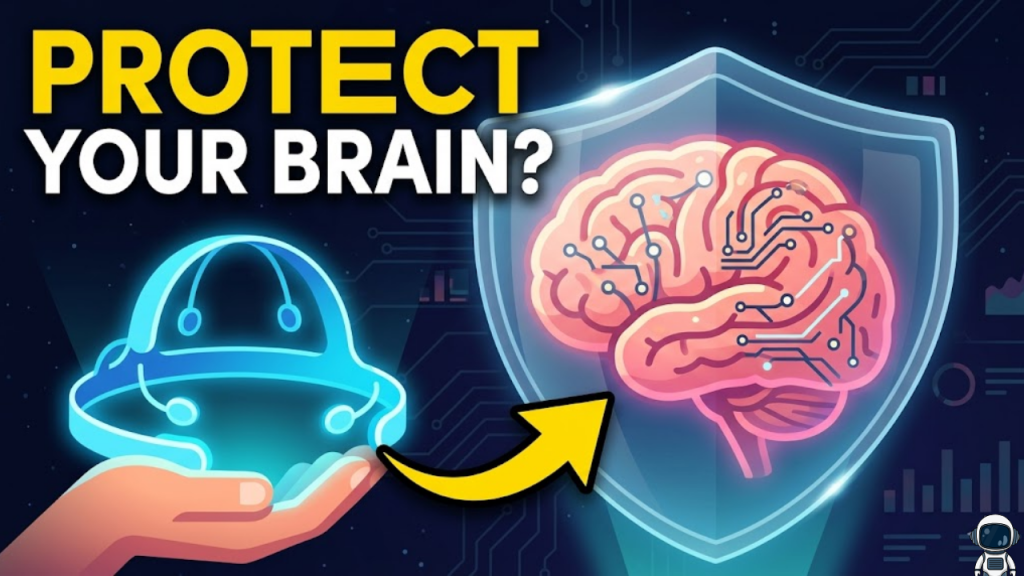
Neural privacy is the right to keep your brain data, your thoughts, emotional states, and subconscious reactions, secure and private. In 2026, neurotechnology has transitioned from niche medical implants to consumer-grade wearables like EEG-enabled headphones and smart headbands. These devices collect “neurodata” that can reveal intimate insights about your mental health, focus, and even your reaction to advertisements. Because this data is arguably the most sensitive information a human can produce, protecting it is no longer just a technical challenge; it is a fundamental human right.
As we enter this new era, protecting the sanctity of the human mind is the most important security mandate of the decade.
The 3 Pillars of Neural Security
To protect neural data in 2026, developers and businesses must adopt a “Privacy-by-Design” architecture. These three pillars serve as your roadmap.
1. Radical Transparency and Consent
Neural data collection is often invisible to the user.
- The Strategy: Avoid “dark patterns” where consent is buried in terms of service. Instead, use clear, “Just-in-Time” permissions. If a device is tracking your focus levels to suggest a break, the app must explicitly ask: “Do you want us to monitor your brain activity to help you rest?” before a single byte of data is sent.
2. On-Device Processing (Edge-First)
The safest data is the data that never leaves the user’s device.
- The Implementation: Use WebAssembly (Wasm) to perform signal processing locally on the user’s phone or computer. By converting raw brain waves into simple “intent” or “state” signals on the device, you eliminate the risk of sensitive raw neurodata being intercepted during cloud transmission.
3. Purpose Limitation
You must define a strict scope for what the data is used for.
- The Strategy: If you collect data for a “meditation” feature, that data must never be used to power a “marketing” algorithm. Implement “Data Siloing” at the database level to ensure that neural insights cannot be shared or sold across different product features.
The Regulatory Landscape: Neuro-Rights
In 2026, the law is finally catching up to the technology. Developers must stay aware of these critical developments.
- The Brain Privacy Act (BPA): States like California have expanded their privacy laws to explicitly include “neural data” as a protected category. This means you must offer users the right to delete their brain data, similar to how they delete their search history.
- Colorado’s Privacy Act (CPA): Colorado has amended its privacy act to mandate rigorous data protection assessments for any company processing neural signals. If you are building a neuro-app, you must now document exactly how you secure this data against unauthorized access.
- Global Standards: The UN Human Rights Council and UNESCO are currently formalizing guidelines to ensure that neurotechnology does not undermine freedom of thought or cognitive liberty.
Frequently Asked Questions (FAQ)
1. Is neural data the same as biometric data?
It is a more sensitive subset of biometric data. While a fingerprint identifies who you are, neural data reveals what you are feeling or thinking. Because of this, it requires even stricter encryption and access controls than traditional biometrics.
2. Can thoughts be “hacked”?
Technically, yes. Lab studies have shown that attackers can present specific visual stimuli to a user and measure their subconscious brain response to extract sensitive info, like bank PINs, without the user ever being aware of it. This is why “Neuro-Security” is the new focus for enterprise defense.
3. Why do I see an Apple Security Warning on my neuro-wearable app?
If your neuro-app uses non-standard APIs to access the microphone or specialized Bluetooth sensors on an iPhone, you may trigger an Apple Security Warning on your iPhone. Always request the minimum permissions needed to function.
4. What is “Neuro-Rights” legislation?
These are emerging laws designed to protect mental privacy and cognitive liberty. They ensure that your internal world remains your own and cannot be exploited by corporations for profit or surveillance.
5. Can I use encryption for brain data?
Yes. You should use Quantum-Resistant Encryption for any neural data that is transmitted or stored, as this data will likely be sensitive for the entirety of a person’s life and must remain secure against future decryption threats.
6. Are there “Neural Privacy” plugins for WordPress?
Not yet. However, if you are building an app that interacts with neuro-wearables, you should use a Secure Middleware layer to handle the data, rather than passing raw neural signals through standard CMS APIs.
7. What is “Cognitive Warfare”?
This is a term used to describe the use of neural insights to manipulate or influence a population’s mental states. It is a top-tier security concern for 2026 defense and tech policy experts.
8. How can I start a career in Neuro-Security?
Focus on Identity Management and Encryption. If you understand how to secure sensitive health data, you are perfectly positioned to pivot into neuro-security as the sector grows.
Final Verdict: Protect the Mind
In 2026, Neural Privacy is not just a feature; it is the core of user trust. By treating every brain signal with the same care as a medical record, you demonstrate that your brand respects the deepest level of human dignity.
Ready to secure your architecture? Explore our guide on Zero-Trust Architecture for Web Developers or learn about the latest in authentication in Why Passkeys are Replacing Traditional Passwords in 2026.
Authority Resources
- Cooley: When Thoughts Go Digital – Neurosecurity Report – A comprehensive legal and security breakdown of the current landscape.
- OHCHR: Human Rights in the Administration of Justice – UN guidelines on emerging neurotech and human rights.
- RM Magazine: The New Landscape of Neural Data Privacy Laws – Understanding how current privacy acts like Colorado’s BPA affect tech companies.
- Osborne Clarke: Neurotechnology Advances and Privacy Risks – ICO insights into discriminatory practices in the age of neural data.