
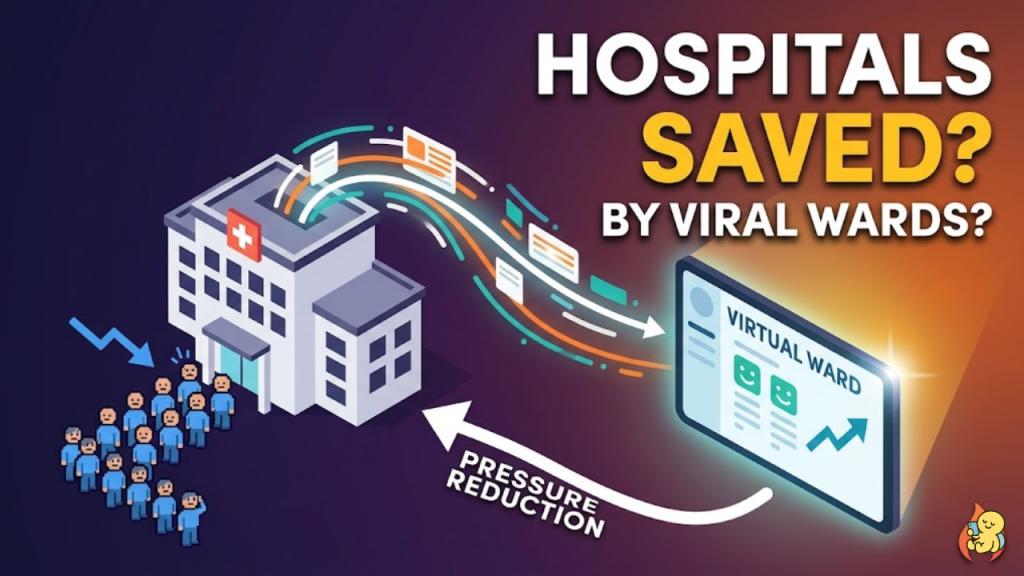
What are virtual wards in 2026?
Virtual wards, often called “Hospital at Home,” allow patients to receive hospital-level care in the comfort of their own homes. In 2026, these are no longer just pilot programs; they are a core component of national health strategies. By using wearable sensors, remote monitoring platforms, and regular clinical video check-ins, medical teams can treat acute conditions, such as frailty, heart failure, and respiratory infections, without a physical bed.
This model aims to provide the same level of safety as a traditional ward while freeing up physical space for emergency cases and complex surgeries.
The Impact: Capacity, Cost, and Recovery (2026)
The data from 2025/26 shows that virtual wards are effectively “building capacity without bricks”.
| Metric | Physical Hospital Ward | Virtual Ward (2026) |
| Cost per Bed Day | ~£569 | ~£118 (80% Saving) |
| Admission Avoidance | N/A | 18% Reduction in Acute Admissions |
| Bed Capacity Boost | Limited by physical space | +5% Immediate Capacity |
| Length of Stay | Standard recovery | 2.8 to 15 Days Saved |
| Patient Preference | High stress/Low privacy | 95.8% Prefer Home Care |
3 Ways Virtual Wards Relieve the “Front Door”
In 2026, virtual wards act as a pressure valve for the entire hospital system through three primary pathways.
1. Step-Up Care (Admission Avoidance)
Instead of admitting a stable but vulnerable patient to an emergency department, clinicians can “step them up” directly to a virtual ward from their GP or an ambulance. This prevents the “front door” from becoming clogged with patients who don’t actually need a physical bed.
2. Step-Down Care (Early Discharge)
Patients who have finished the “acute” phase of their treatment but still need monitoring (e.g., IV antibiotics or vital sign tracking) can be “stepped down” to a virtual ward. This frees up their physical bed for the next patient much sooner than traditional protocols allowed.
3. Real-Time Escalation
Modern 2026 monitoring tools use AI to detect “deterioration” before it becomes an emergency. If a patient’s oxygen levels dip or heart rate spikes, the system alerts the clinical team immediately, often allowing for a home-based intervention that prevents a re-admission.
Challenges and Limitations
Despite the benefits, virtual wards are not a “one-size-fits-all” solution.
- Acuity Limits: Sepsis, severe trauma, or conditions requiring immediate surgery still demand physical presence. A virtual ward cannot replace an Operating Theatre.
- The “Weakest Link” (Digital Literacy): For virtual wards to work, patients or their carers must be able to use the technology. In 2026, “Secure by Design” systems are helping, but the “digital divide” remains a risk for elderly or isolated patients.
- Workforce Readiness: Success depends on the confidence of the clinical staff. In 2026, the focus has shifted from “the tech” to “the training”, ensuring doctors and nurses feel safe managing patients they cannot physically touch.
Frequently Asked Questions (FAQ)
1. Are virtual wards as safe as physical wards?
Yes. 2026 evaluations show that 98.3% of patients feel safe, and survival rates for suitable candidates are equal to or slightly better than in-hospital care due to the reduced risk of hospital-acquired infections.
2. How many hospital beds do virtual wards actually free up?
On average, a 40-bed virtual ward can free up approximately 3 to 5 physical beds per day, creating the capacity equivalent of an entire additional ward within a year.
3. Who is eligible for a virtual ward?
Typically, adults and children with stable but acute conditions like frailty, COPD, heart failure, or those requiring short-term post-operative monitoring.
4. Why do I see an Apple Security Warning on my health monitor?
If your remote monitoring app attempts to share medical data over an unencrypted connection or lacks proper permissions on your device, you may trigger an Apple Security Warning on your iPhone.
5. What happens if I get worse at home?
Every virtual ward has a clear “Escalation Plan.” If the monitoring data shows you are deteriorating, the team will either send a community nurse to your home or arrange for an immediate ambulance transfer back to the hospital.
6. Do I have to pay for the equipment?
No. In 2026, the NHS and other national health systems provide the monitoring devices (tablets, wearables, BP cuffs) as part of your standard care package.
7. How long do people stay on a virtual ward?
The average stay is around 14 days, though some “thematic” wards (like circulatory care) may keep patients for longer if they require extended monitoring.
8. Does this reduce the workload for nurses?
It changes the workload. While it reduces the “physical” labor of bed-side care, it increases the need for data analysis and remote communication. In 2026, dedicated virtual ward teams manage these cohorts to avoid burning out the on-site hospital staff.
Final Verdict: Bricks and Clicks Working Together
In 2026, virtual wards are the most effective way to reduce hospital pressure. By moving stable, acute care into the home, we ensure that physical hospital beds are always available for the people who need them most. While challenges in digital literacy and cost-effective management remain, the shift from “Hospital as a Place” to “Hospital as a Service” is the defining medical trend of our time.
Ready to explore more? Check out our guide on How to Become a Web Developer in 2026 to see how these medical apps are built, or learn how to secure patient data in Zero-Trust Architecture for Developers.
Authority Resources
- NHS England: Virtual Ward Capacity and Occupancy 2026 – The official data on how many “virtual beds” are currently active.
- BMJ: Length of Stay and Sustainability of Virtual Wards – A peer-reviewed study on the clinical effectiveness and cost of the model.
- HTN: Hospital at Home Evaluation 2026 – Real-world case studies showing 80% cost savings in UK Trusts.
- UK Parliament: Virtual Wards and Hospital at Home – A policy briefing on the future of “hospital to community” transitions.