What is Li-Fi?
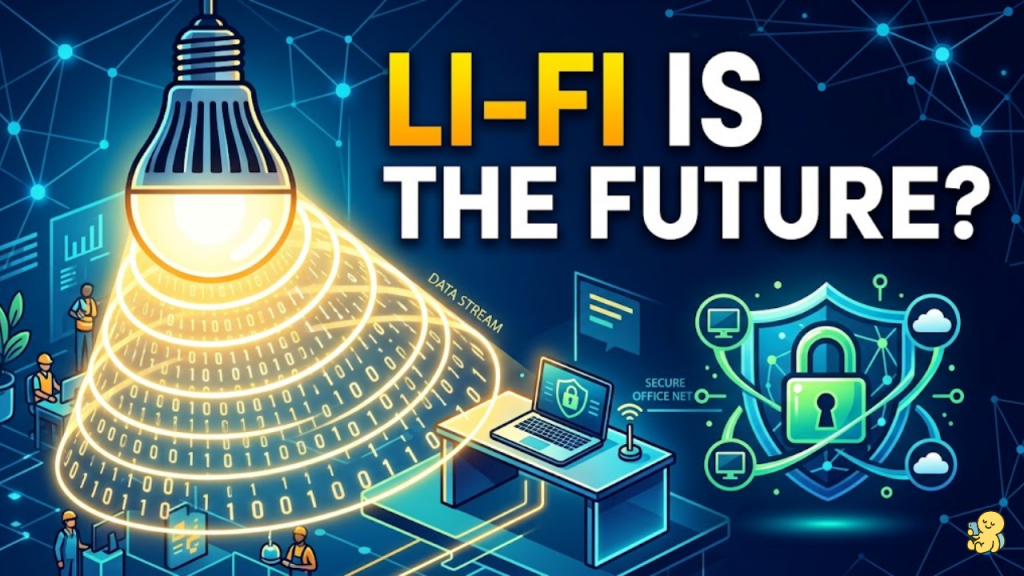
Li-Fi, or Light Fidelity, is a wireless communication technology that transmits data using visible light, infrared, or ultraviolet spectrums instead of traditional radio waves. In 2026, Li-Fi has moved past the experimental phase and into widespread enterprise adoption. Because light waves cannot penetrate walls, an office network using Li-Fi creates a “physical security perimeter” by default. If you are not in the room with the light source, you simply cannot access the data.
For businesses dealing with sensitive data, this provides a level of security that radio-based Wi-Fi simply cannot match.
Li-Fi vs. Wi-Fi: The 2026 Security Landscape
In 2026, we view these technologies as complementary rather than competitive. Wi-Fi offers building-wide roaming, while Li-Fi provides the “secure backbone” for high-stakes work.
| Feature | Wi-Fi (Radio Frequency) | Li-Fi (Visible Light) |
| Security | Broadcasts through walls | Contained by walls |
| Interference | Vulnerable to RF congestion | Immune to RF interference |
| Speed | 1 Gbps to 5 Gbps | Up to 10+ Gbps |
| Infrastructure | Dedicated Router | Existing LED lighting |
| Best Use Case | General mobile roaming | High-security labs and R&D |
3 Reasons Li-Fi Wins in High-Security Offices
If your goal is to prevent data leakage, Li-Fi provides three distinct advantages that radio-based networks lack.
1. Physical Containment
Radio waves are “leaky” by nature. They pass through ceilings, floors, and walls, meaning an attacker in the parking lot could theoretically sniff your traffic. Li-Fi signals are strictly limited to the illumination zone. If the light does not hit the room, the data is not there.
2. Zero RF Interference
In crowded office buildings, Wi-Fi performance often suffers because of interference from microwaves, Bluetooth devices, and neighboring networks. Because Li-Fi uses the light spectrum, it operates in a completely different frequency band. It is immune to the “congestion” that plagues modern corporate networks.
3. Dual-Purpose Infrastructure
In 2026, sustainability is a business priority. Li-Fi uses the existing LED lighting systems in your ceiling to transmit data. This reduces the need for heavy cable runs and extra router hardware, effectively turning your office lights into a high-speed broadband network.
Frequently Asked Questions (FAQ)
1. Is Li-Fi compatible with my current devices?
It requires a dedicated receiver (often a USB dongle or integrated chip) for your laptop or tablet. However, many 2026 professional-grade devices are beginning to include optical sensors for native Li-Fi support.
2. What happens if I cover the light sensor?
The connection drops or slows significantly. Just like a flashlight, Li-Fi requires a line-of-sight path. However, most modern office setups use “reflective” light, meaning even if you block the direct path, the light bouncing off walls keeps you connected.
3. Can Li-Fi work in the dark?
Yes. 2026 systems often use infrared light for data transmission. This allows the network to stay active even when the visible room lights are turned off.
4. Why do I see an Apple Security Warning on my network?
If your Li-Fi bridge attempts to use non-standard hardware identifiers to authenticate your device, you may trigger an Apple Security Warning on your iPhone.
5. Is Li-Fi better for healthcare or industrial sites?
Absolutely. Since Li-Fi does not produce electromagnetic interference, it is the safest choice for hospitals with sensitive medical machinery and factories with delicate robotic sensors.
6. Can I have Wi-Fi and Li-Fi in the same room?
Yes, this is the recommended “Hybrid” setup. You use Wi-Fi for mobile roaming throughout the building and Li-Fi for “Data Zones” like conference rooms or executive offices where security is the primary concern.
7. Does direct sunlight interfere with Li-Fi?
Modern Li-Fi systems use advanced signal processing and optical filters to distinguish between sunlight and data signals, so they function reliably even in bright offices.
8. Will Li-Fi replace Wi-Fi?
No. Wi-Fi is still the king of convenience and mobility. Li-Fi is the king of security and speed. They are partners, not rivals.
Final Verdict: Light as a Secure Layer
In 2026, Li-Fi is the perfect “secure layer” for any business that treats its data as its most valuable asset. By leveraging the physics of light, you build a network that is literally impossible to hack from outside the room.
Ready to secure your office? Explore our guide on Zero-Trust Architecture for Web Developers or learn how to secure your authentication in Why Passkeys are Replacing Traditional Passwords.
Authority Resources
- pureLiFi: The Industry Leader in Light-Based Communications – Official technical overview and implementation guides for enterprises.
- Li-Fi Centre: Market Context and Growth Trends – Detailed analysis of the 2026-2035 market outlook.
- Research Nester: Li-Fi Market Size and Forecast – Industry data and technical growth projections for 2026.
- Lightyear: Comparing Enterprise Connectivity – A practical comparison of Wi-Fi and Li-Fi for business environments.